
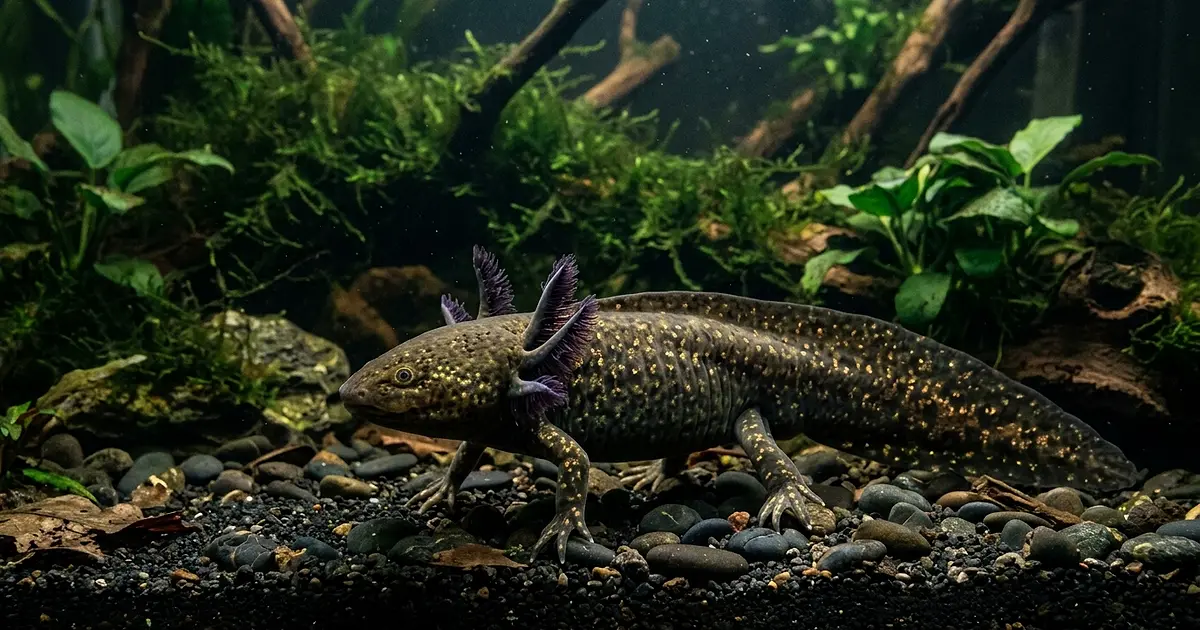
The wild type axolotl carries the original coloration found in Lake Xochimilco. While less flashy than leucistic or GFP morphs, wild types have a natural beauty with their dark body scattered with golden speckles that shimmer under aquarium lighting.
Appearance
- Body: dark brown, olive, or gray-green
- Speckles: gold and iridescent spots across the body (from iridophores)
- Eyes: dark with a gold ring
- Gills: dark reddish-brown with visible blood flow
- Belly: lighter, cream to pale gray
- Juveniles: often darker, speckles develop with age
Wild types are the most genetically diverse morph. No two look exactly alike, with variations in base darkness, speckle density, and undertone (more brown vs more green).
Genetics
Wild type coloration is the dominant phenotype. It results from the normal expression of all four pigment genes:
- Melanophores: dark pigment (brown/black)
- Xanthophores: yellow/gold pigment
- Iridophores: reflective/shiny cells (the sparkle)
All other morphs are recessive mutations that suppress one or more of these pigment types. Wild type is what you get when none of these mutations are present.
Why Keep a Wild Type?
- Hardiest morph: the most genetically diverse, often the healthiest
- Natural beauty: the gold speckles under LED lighting are stunning
- Best genetics: ideal for breeding programs aiming for genetic diversity
- Historical significance: this is what axolotls actually look like in nature
- Easy to find health issues: dark body makes white fungal patches easy to spot
Care and Price
Identical care to all other morphs. Standard tank setup, standard diet.
| Type | Price |
|---|---|
| Standard wild type | $25-45 |
| GFP wild type | $45-85 |
| Large adult | $40-60 |
Wild type axolotls are the most affordable morph and widely available from any breeder or pet store that carries axolotls.
Frequently Asked Questions
Frequently Asked Questions
What color is a wild type axolotl?
Are wild type axolotls cheaper than other morphs?
Related Articles
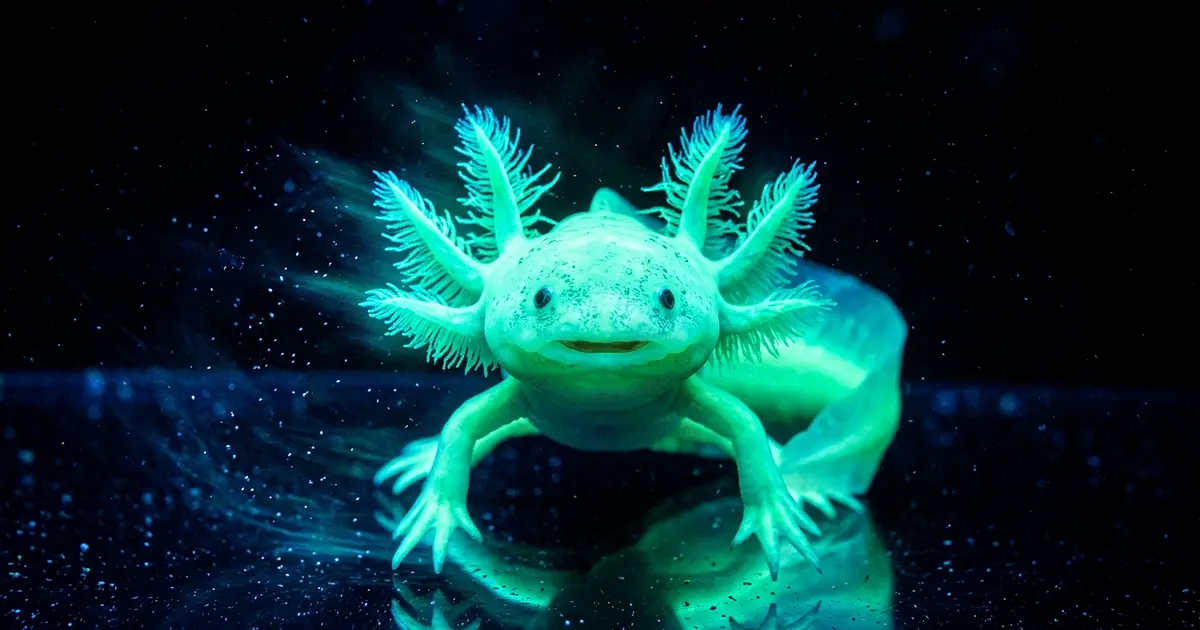
Blue Axolotl: Do They Really Exist?
The truth about blue axolotls. Learn why they appear blue in photos, what GFP means, and which axolotl morphs actually exist in real life.
Read more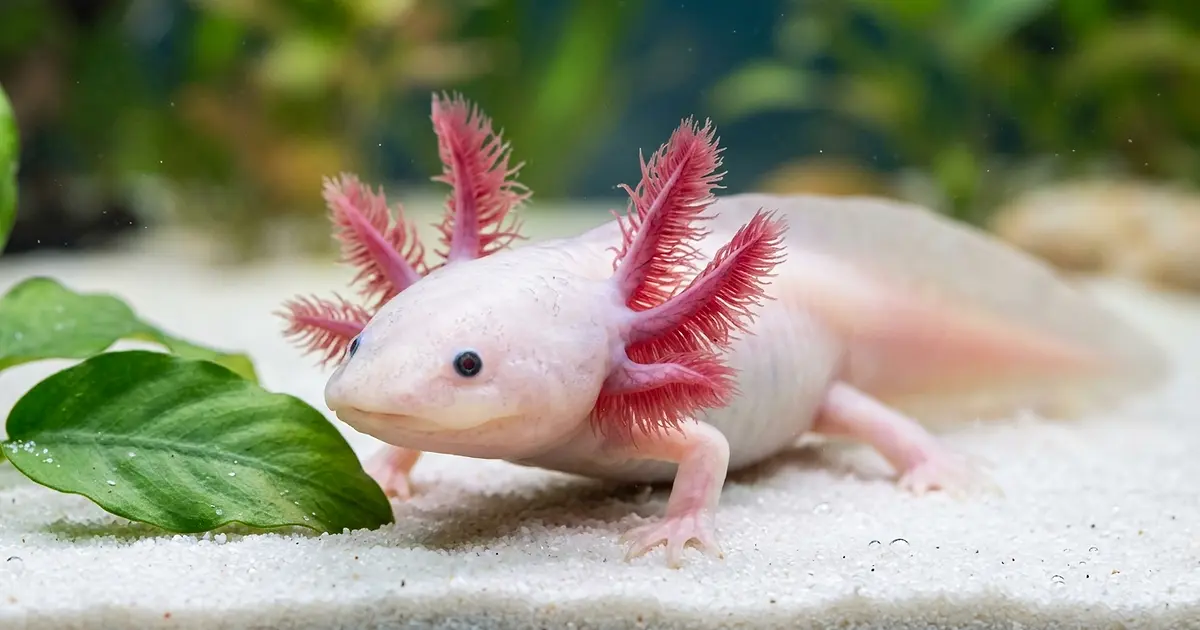
Leucistic Axolotl: The Most Popular Pet Morph
Leucistic axolotl (Lucy): the iconic pink-white morph with dark eyes. Appearance, genetics, dirty Lucy variant, albino comparison, pricing, and care tips.
Read more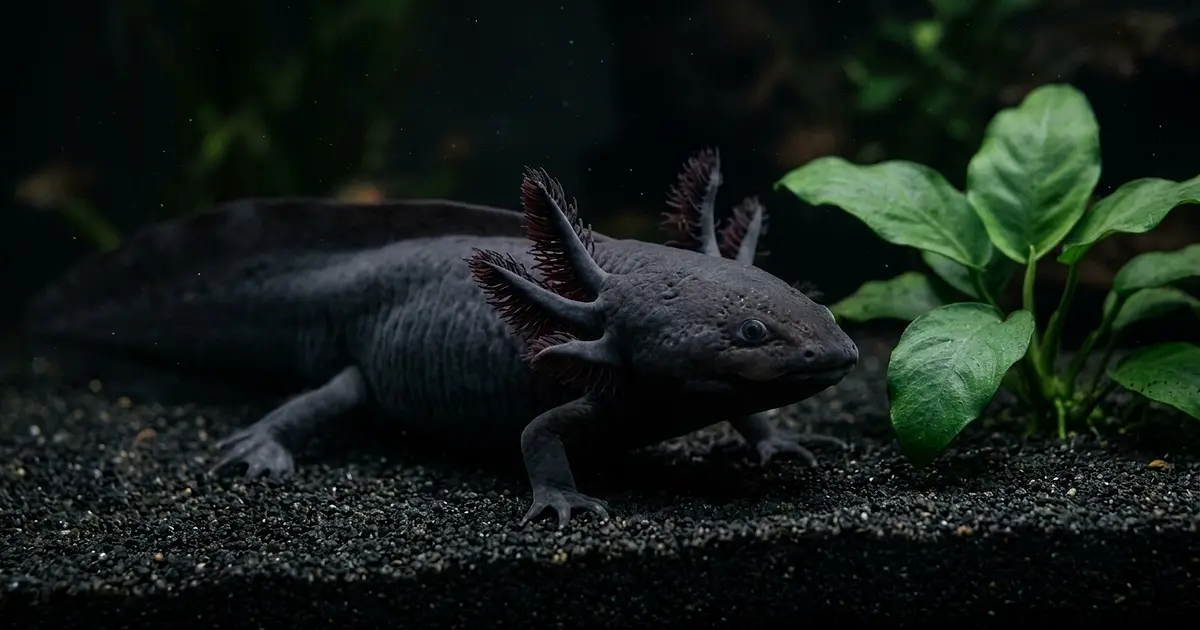
Melanoid Axolotl: The Black Morph Explained
Melanoid axolotl morph: solid black coloration without iridescent spots, melanoid genetics, matte appearance, pricing, and comparison with wild type.
Read more