
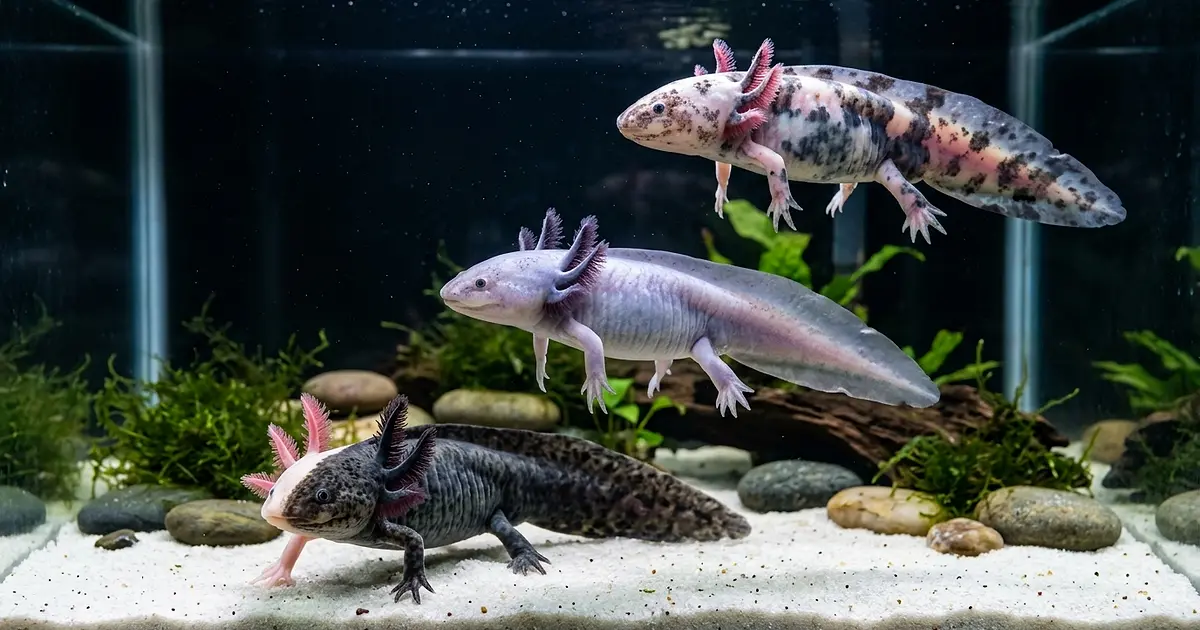
While common morphs like leucistic and wild type are beautiful in their own right, a handful of extremely rare morphs exist that collectors and breeders dream about. Most of these cannot be bred intentionally and appear only by genetic chance.
The Rarest Morphs
Chimera
A chimera axolotl is split down the middle with two completely different color patterns, one morph on each side. For example, half leucistic and half wild type.
This occurs when two separate embryos fuse early in development, creating one animal with two distinct sets of DNA. It cannot be bred intentionally. Chimeras are one-of-a-kind animals.
Price: $300-800+ (when available, which is almost never)
Mosaic
Mosaic axolotls have irregular patches of two or more colors scattered randomly across their body, unlike the clean split of a chimera. The pattern is unique to each individual.
Like chimeras, mosaics result from genetic irregularities during development and cannot be reliably reproduced through breeding.
Price: $200-500+
Firefly
The firefly axolotl has a dark body with a GFP-expressing tail that glows green under UV light while the rest of the body does not. This morph was created in laboratories through embryonic grafting (transplanting tail tissue from a GFP embryo onto a non-GFP embryo).
Firefly axolotls are not produced by breeders and are essentially lab-only specimens. Finding one in the pet trade is exceptionally rare.
Price: rarely available, $200-400 when they appear
Enigma
Enigma axolotls have a dark body with shiny golden or iridescent patches that create a galaxy-like appearance. The gene responsible is poorly understood and appears to have limited heritability.
Some breeders have had limited success producing enigma offspring, but results are inconsistent. The morph is gaining popularity as more breeders experiment with it.
Price: $150-350
Piebald
Piebald axolotls are leucistic with large, irregular dark patches on their body. Unlike the small freckles of a “dirty Lucy,” piebald markings are bold, well-defined, and cover significant areas.
Piebald has some genetic heritability and can sometimes be produced by breeding piebald parents, but the pattern and extent of markings are unpredictable.
Price: $150-350
Hypomelanistic
A subtle morph with reduced melanin resulting in a lighter version of the wild type. The body is a pale olive or tan with reduced speckling. Less dramatic than other rare morphs but genuinely uncommon.
Price: $60-120
Rarity Comparison
| Morph | Can Be Bred? | Availability | Price Range |
|---|---|---|---|
| Chimera | No | Extremely rare | $300-800+ |
| Firefly | No (lab only) | Extremely rare | $200-400 |
| Mosaic | No | Very rare | $200-500+ |
| Enigma | Limited | Rare | $150-350 |
| Piebald | Partially | Uncommon | $150-350 |
| Hypomelanistic | Yes | Uncommon | $60-120 |
How to Find Rare Morphs
- Join axolotl communities: Facebook groups, Reddit r/axolotls, and dedicated forums are where breeders announce rare morphs
- Follow specialty breeders: some breeders specialize in rare genetics and maintain waiting lists
- Be patient: rare morphs appear unpredictably, you may wait months or years
- Verify authenticity: ask for photos under different lighting, poor lighting can make common morphs look rare
Frequently Asked Questions
Frequently Asked Questions
What is the rarest axolotl in the world?
Can you breed rare axolotl morphs?
Related Articles
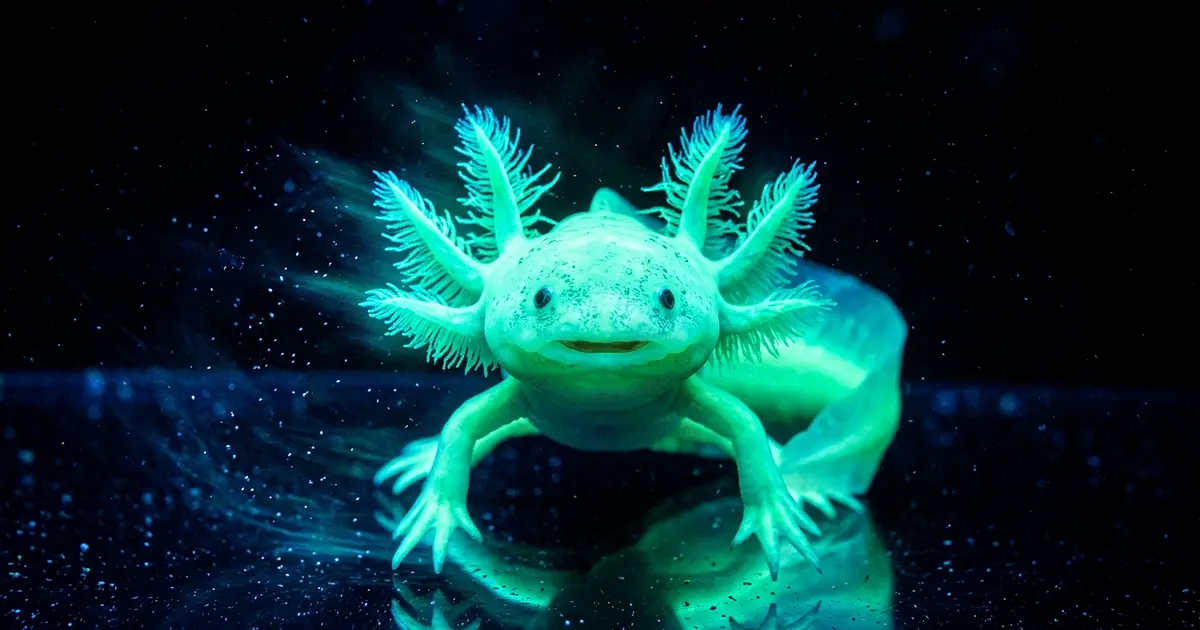
Blue Axolotl: Do They Really Exist?
The truth about blue axolotls. Learn why they appear blue in photos, what GFP means, and which axolotl morphs actually exist in real life.
Read more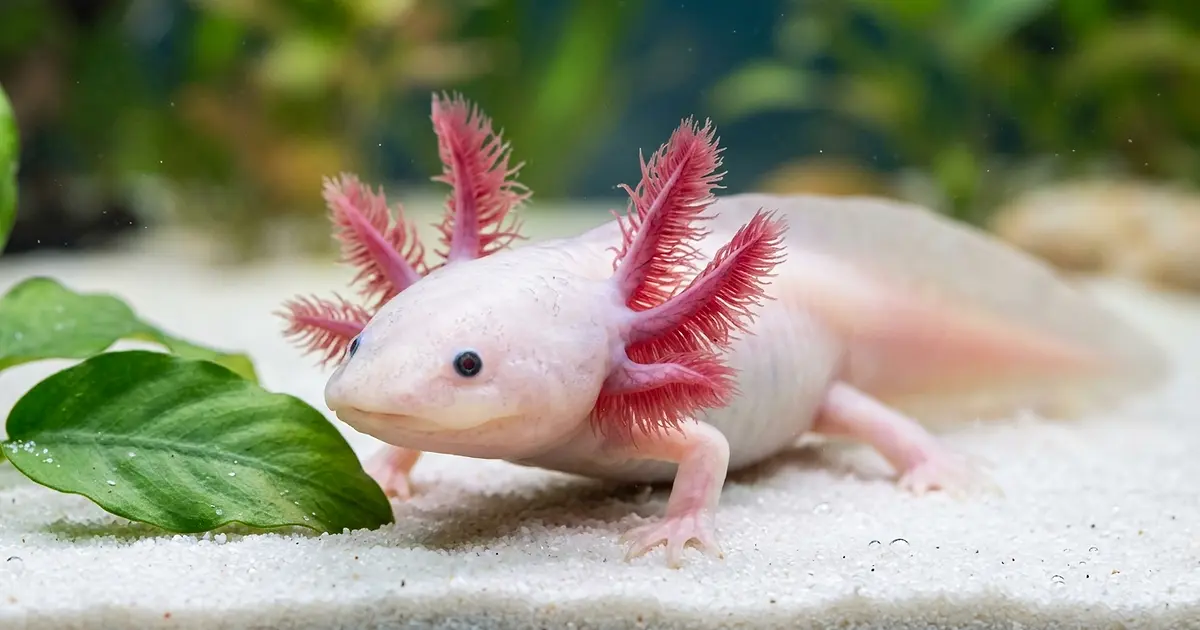
Leucistic Axolotl: The Most Popular Pet Morph
Leucistic axolotl (Lucy): the iconic pink-white morph with dark eyes. Appearance, genetics, dirty Lucy variant, albino comparison, pricing, and care tips.
Read more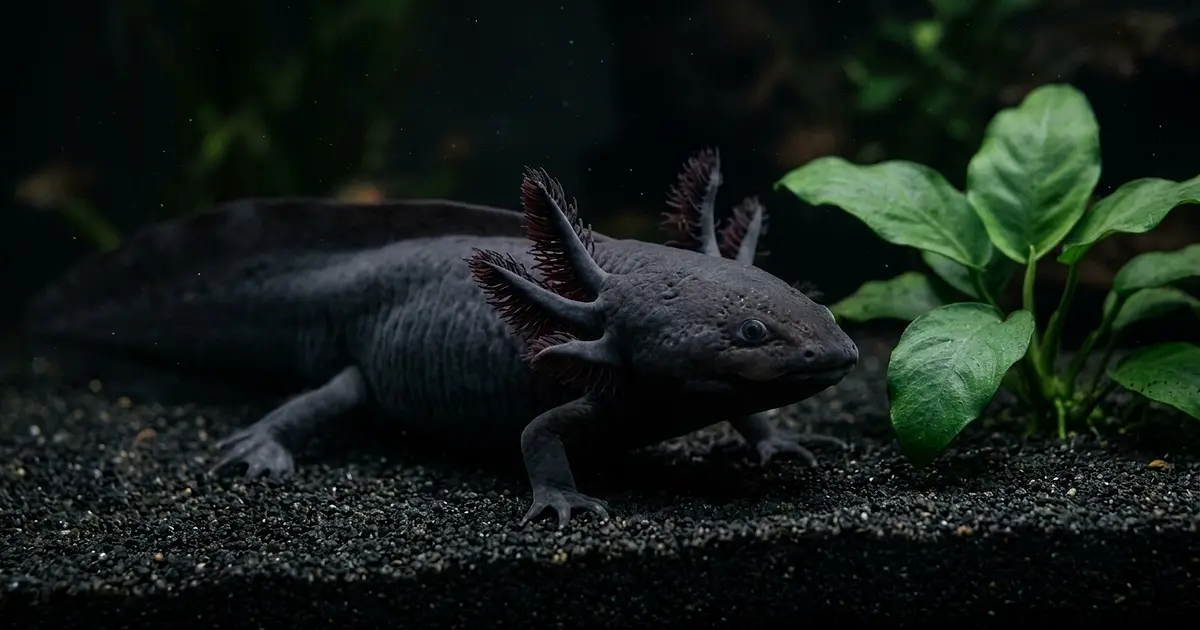
Melanoid Axolotl: The Black Morph Explained
Melanoid axolotl morph: solid black coloration without iridescent spots, melanoid genetics, matte appearance, pricing, and comparison with wild type.
Read more