
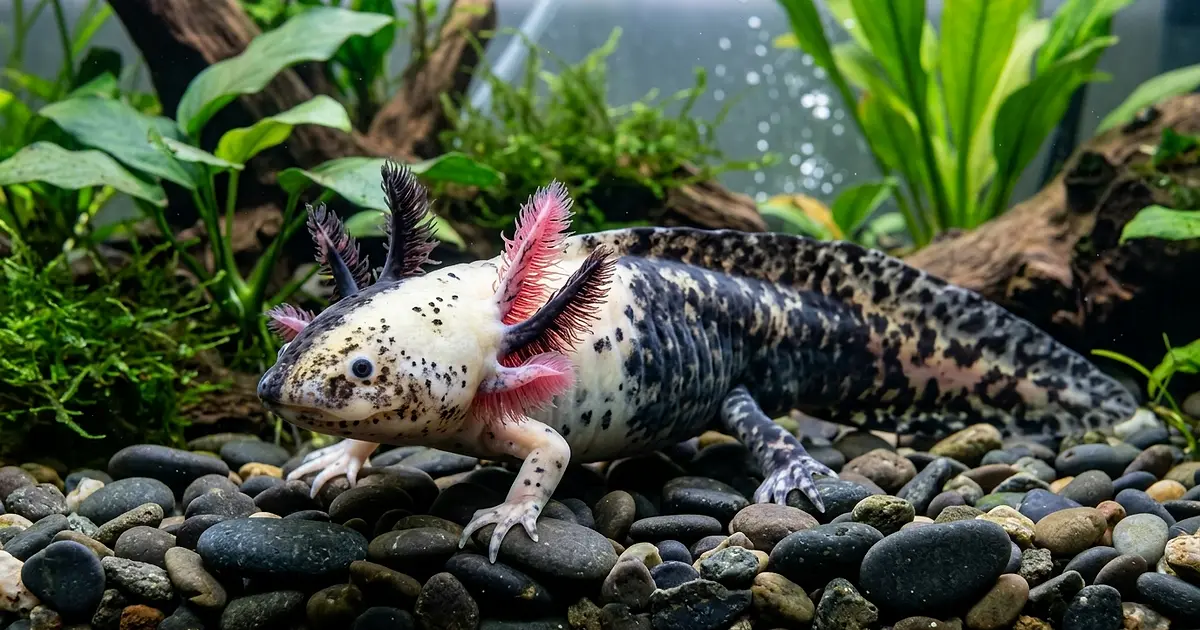
The mosaic axolotl is one of the rarest and most visually striking morphs you can find. With a split-color pattern that often divides the body into two distinct halves, no two mosaics look alike. They cannot be bred intentionally, making each one a genuine biological rarity.
What Does a Mosaic Axolotl Look Like?
Mosaic axolotls display a patchwork of two or more distinct color patterns on a single body. The most dramatic examples show a near-perfect split down the middle: one half dark (melanoid or wild type coloring) and the other half light (leucistic or albino coloring).
Common visual features:
- Asymmetric coloration, often split left/right or front/back
- Patches of dark and light skin mixed across the body
- Eyes that may be two different colors (heterochromia)
- Gills that can differ in color between left and right sides
- Irregular blotchy patterns rather than clean lines
The split is rarely perfectly symmetrical. Most mosaics have an uneven distribution of colors, which makes each animal truly unique.
How Mosaic Axolotls Form
Mosaic axolotls are not the result of a specific gene. They are developmental accidents that occur very early in embryonic growth. There are two main mechanisms:
Genetic Mosaicism
A single fertilized egg begins dividing normally, but early in development a spontaneous mutation occurs in one cell. That cell and all its descendants carry the mutation, while the rest of the embryo remains unchanged. The result is an animal with two genetically distinct cell populations growing side by side.
Chimerism
Two separately fertilized eggs (which would normally become twins) fuse together into a single embryo during the earliest stages of development. The resulting animal contains cells from both original embryos, producing a patchwork appearance.
In practice, genetic mosaicism and chimerism produce very similar-looking animals. Without laboratory genetic testing, it is nearly impossible to determine which mechanism created a particular individual.
Why Mosaics Cannot Be Bred
This is the key fact that makes mosaics so rare: the pattern is not heritable.
| Breeding Scenario | Result |
|---|---|
| Mosaic x Mosaic | Normal offspring matching the morph genetics of each parent cell line |
| Mosaic x Wild Type | Normal offspring, no mosaic pattern |
| Mosaic x Leucistic | Normal offspring following standard genetic inheritance |
Because the mosaic pattern comes from a random developmental event rather than a gene, there is no way to select for it or increase its frequency through breeding. Every mosaic axolotl is a random occurrence with odds estimated at less than 1 in 10,000 hatches.
Mosaic vs Chimera vs Piebald
These terms are often confused:
| Type | Cause | Pattern | Breedable? |
|---|---|---|---|
| Mosaic | Mutation during cell division | Split/patchy two-tone | No |
| Chimera | Two embryos fuse | Split/patchy two-tone | No |
| Piebald | Genetic trait (partial leucism) | White patches on dark body | Partially (variable expression) |
| Dirty leucistic | Normal variation | Dark spots on white body | Yes (but spots are unpredictable) |
Many axolotls sold as “mosaics” are actually heavily spotted or piebald animals. A true mosaic has large, distinct patches of completely different coloration, not just scattered spots.
Care Requirements
Mosaic axolotls have no special care needs. Despite their unusual appearance, they are biologically normal axolotls with standard requirements:
- Temperature: 16-20 degrees Celsius
- pH: 6.5-8.0
- Ammonia and nitrite: 0 ppm
- Diet: earthworms, pellets, bloodworms
- Tank: minimum 75 liters with hides
The mosaic pattern does not affect health, lifespan, or behavior. These animals eat, grow, and regenerate limbs just like any other axolotl.
If the mosaic includes albino cell populations, those areas of the body may be more light-sensitive, so providing hides is especially important.
Price and Availability
Mosaic axolotls are among the most expensive morphs due to their extreme rarity:
| Quality | Estimated Price |
|---|---|
| Subtle mosaic (minor patchwork) | $300-500 |
| Clear split pattern | $500-800 |
| Dramatic half-and-half split | $800-1,500+ |
Buyer warnings:
- Be very skeptical of cheap “mosaics” under $200. They are likely heavily spotted leucistic or piebald animals
- Ask for multiple photos from different angles to verify the pattern
- Buy only from established breeders with a solid reputation
- True mosaics are almost never available in pet stores
The rarity of mosaic axolotls also makes them prized among collectors. Some particularly striking individuals have sold for over $1,000 at auction.
Should You Buy a Mosaic Axolotl?
If you are drawn to the unique appearance and can afford the premium price, a mosaic axolotl makes an incredible pet. They have the same temperament and care needs as any other morph, so experience level is not a concern.
However, if you are just starting out with axolotls, a leucistic or wild type axolotl at a fraction of the cost will give you an equally rewarding experience. You can always add a mosaic to your collection later once you are confident in your husbandry skills and can spot a genuine mosaic from a mislabeled one.
For those interested in other rare axolotl colors, firefly, chimera, and enigma morphs are similarly uncommon and worth researching.
Frequently Asked Questions
Frequently Asked Questions
Can you breed mosaic axolotls?
How much does a mosaic axolotl cost?
What is the difference between a mosaic and a chimera axolotl?
Related Articles
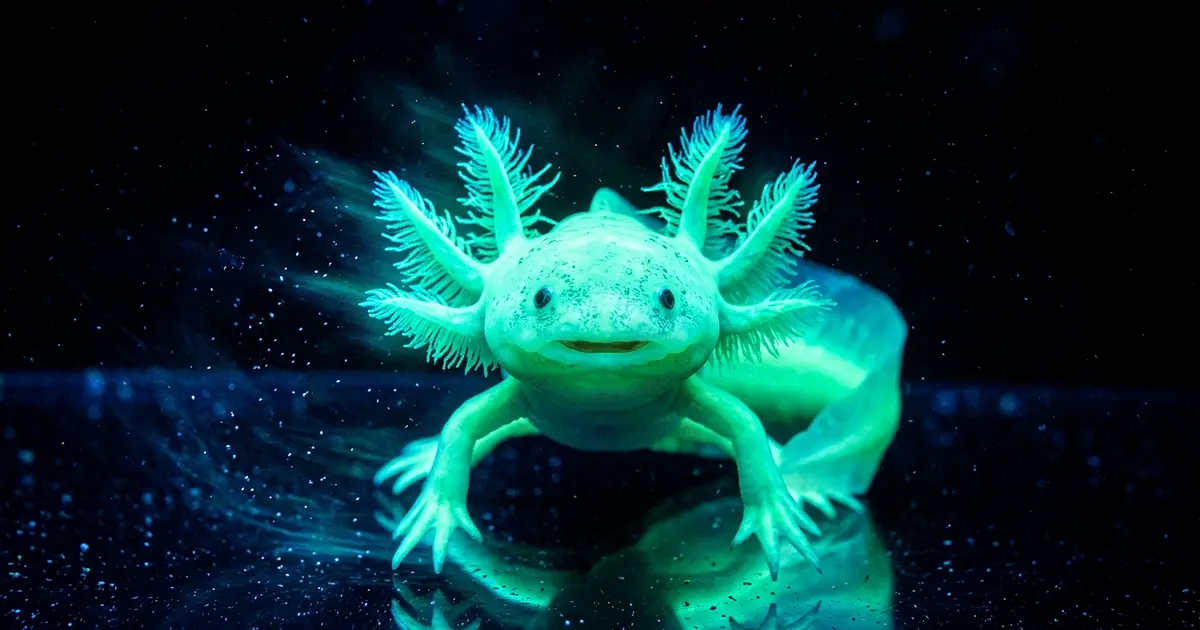
Blue Axolotl: Do They Really Exist?
The truth about blue axolotls. Learn why they appear blue in photos, what GFP means, and which axolotl morphs actually exist in real life.
Read more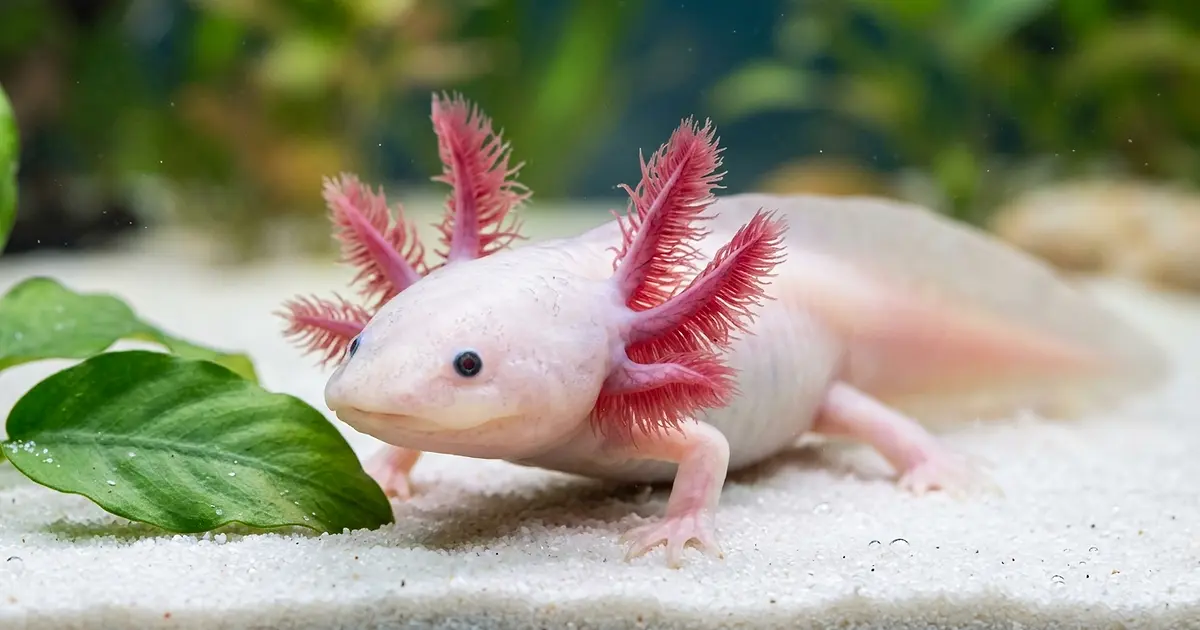
Leucistic Axolotl: The Most Popular Pet Morph
Leucistic axolotl (Lucy): the iconic pink-white morph with dark eyes. Appearance, genetics, dirty Lucy variant, albino comparison, pricing, and care tips.
Read more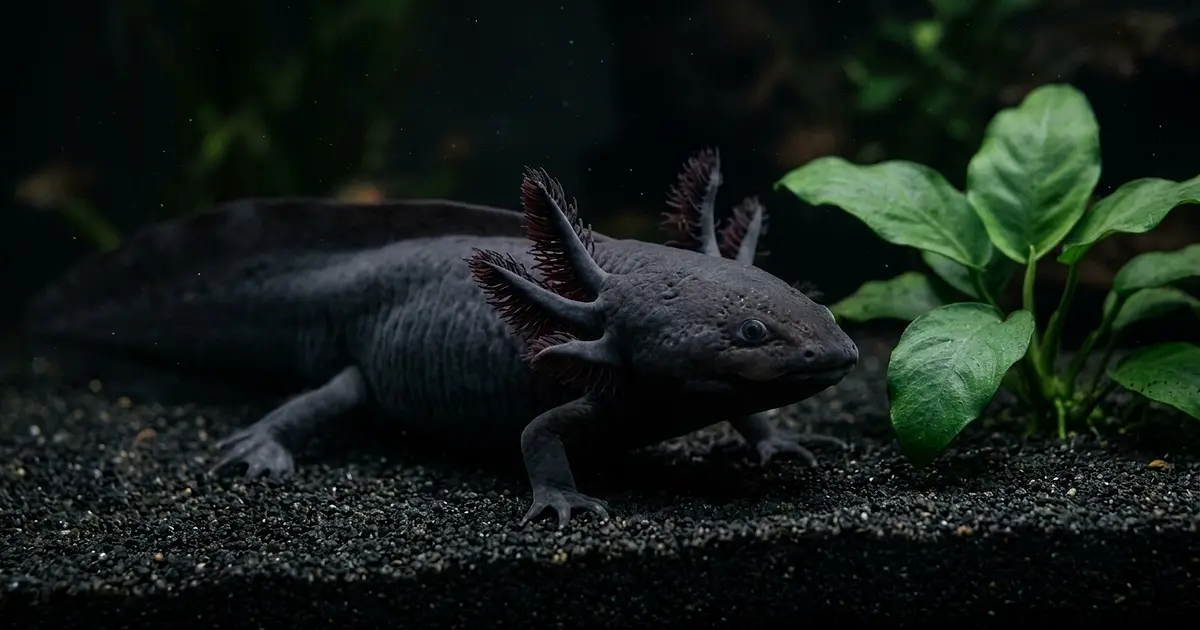
Melanoid Axolotl: The Black Morph Explained
Melanoid axolotl morph: solid black coloration without iridescent spots, melanoid genetics, matte appearance, pricing, and comparison with wild type.
Read more