
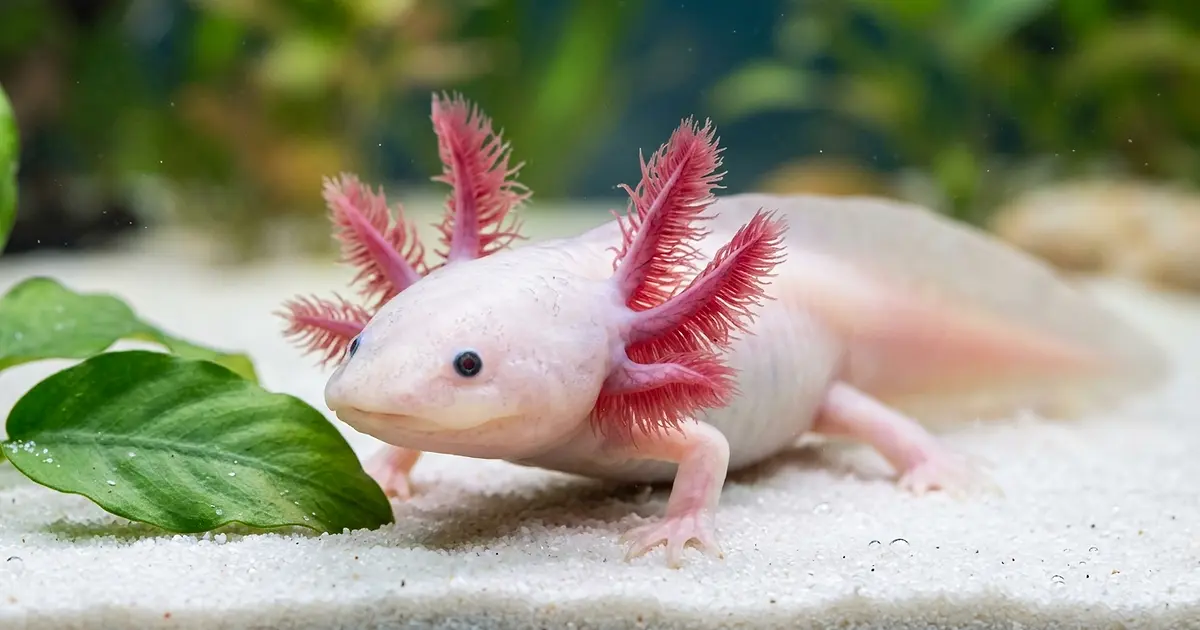
The leucistic axolotl, affectionately known as “Lucy,” is the most iconic and popular axolotl morph in the pet trade. Its pale pink-white body and dark eyes make it instantly recognizable and endlessly photogenic.
Appearance
Leucistic axolotls have:
- Body: translucent white to pale pink skin
- Eyes: dark (black or dark brown), clearly visible
- Gills: bright pink to deep red, with visible blood vessels
- Belly: slightly more opaque white
- Spots: some leucistic axolotls develop dark freckles or spots as they age, particularly on the head and back
The pink coloring comes from blood vessels visible through the translucent skin, not from pink pigment. The gills appear particularly vivid because they are packed with blood vessels for oxygen exchange.
Leucistic vs Albino: Key Differences
| Feature | Leucistic | Albino |
|---|---|---|
| Eye color | Dark (black/brown) | Red or pink |
| Body color | White-pink | White (white albino) or golden (golden albino) |
| Light sensitivity | Normal | Increased (no eye pigment) |
| Freckles/spots | May develop dark spots | Never develops dark spots |
| Gill color | Pink to red | Pink to red |
The critical difference is eye color. If the eyes are dark, it is leucistic. If the eyes are red or pink, it is albino.
Genetics
Leucism in axolotls is caused by a mutation in the “d” gene (dark) that reduces melanin distribution in the skin while preserving it in the eyes. It is an autosomal recessive trait, meaning both parents must carry the gene for leucistic offspring to appear.
Breeding two leucistic axolotls together produces 100% leucistic offspring. Breeding a leucistic with a wild type (who does not carry the gene) produces 0% leucistic offspring in the first generation, but all offspring carry the gene.
The “Dirty Lucy” Variant
Some leucistic axolotls develop significant dark spotting or freckling, especially on the head, back, and tail. These are sometimes called “dirty leucistic” or “dirty Lucy” axolotls. This is not a separate morph but a natural variation where melanophores are partially expressed in certain areas.
Dirty leucistic axolotls are perfectly healthy. Some keepers find the speckled pattern more attractive than a pure white leucistic.
Care Tips
Leucistic axolotls do not require any special care compared to other morphs. Standard guidelines apply:
- Temperature: 16-20°C
- pH: 6.5-8.0
- Ammonia/nitrite: 0 ppm
- Diet: earthworms, pellets, bloodworms
- Tank: minimum 75 liters with hides
Their light-colored skin makes it slightly easier to spot health issues like redness, fungus, or injuries, which is actually an advantage for newer keepers.
Price and Availability
Leucistic axolotls are among the most common and affordable morphs:
- Standard leucistic: $30-60
- GFP leucistic: $50-100 (glows under UV light)
- Dirty leucistic: $30-60 (same price as standard)
They are widely available from breeders, pet stores, and online shops. Their popularity means they are almost always in stock. Compare all available morphs in our axolotl colors guide.
Confirm Your Morph
Take the 4-question morph identification quiz
Frequently Asked Questions
Frequently Asked Questions
What is the difference between leucistic and albino axolotls?
How much does a leucistic axolotl cost?
Do leucistic axolotls need special care?
Related Articles
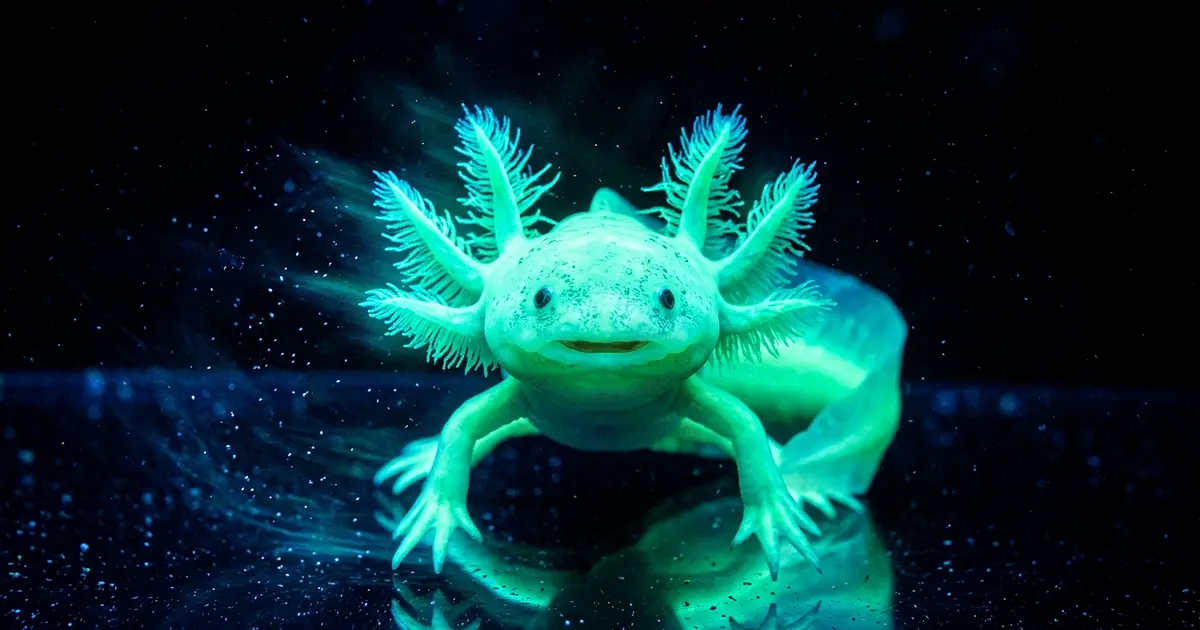
Blue Axolotl: Do They Really Exist?
The truth about blue axolotls. Learn why they appear blue in photos, what GFP means, and which axolotl morphs actually exist in real life.
Read more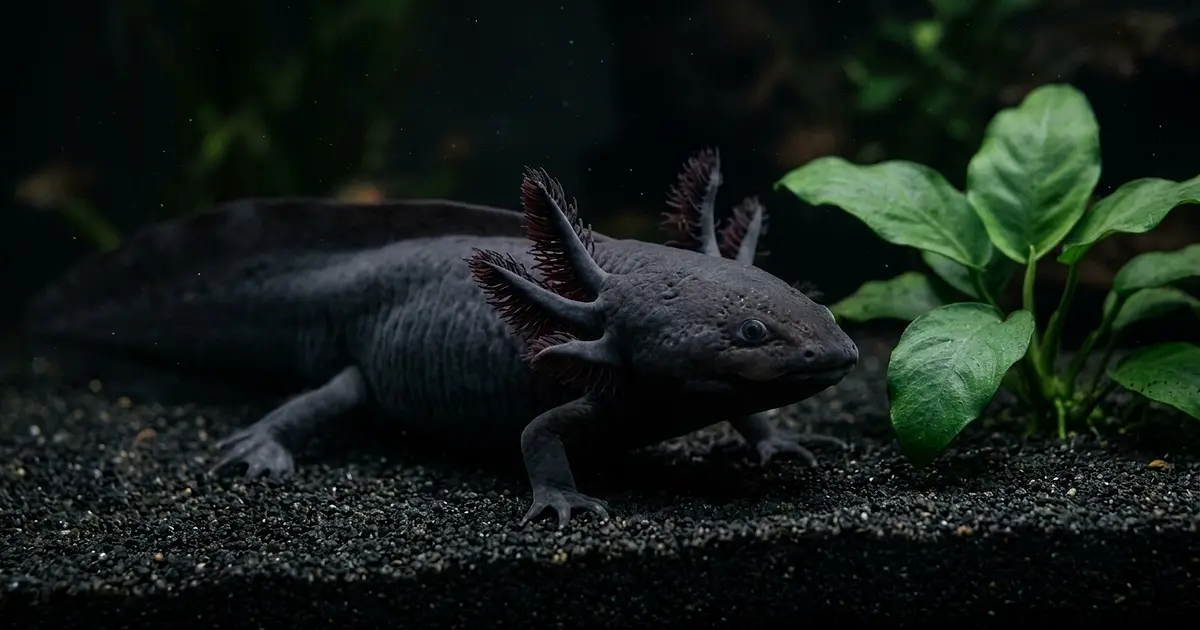
Melanoid Axolotl: The Black Morph Explained
Melanoid axolotl morph: solid black coloration without iridescent spots, melanoid genetics, matte appearance, pricing, and comparison with wild type.
Read more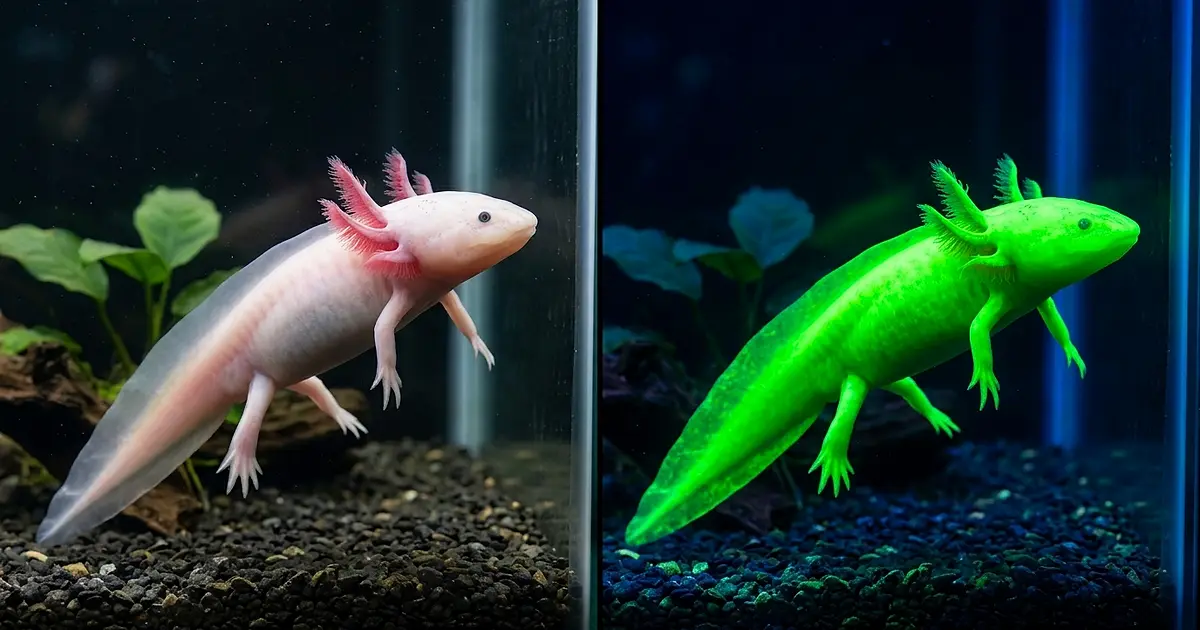
GFP Axolotl: How the Fluorescent Gene Works
GFP axolotls carry a jellyfish gene that makes them glow green under UV light. How it works, which morphs look best, safe UV viewing, and pricing by variant.
Read more