
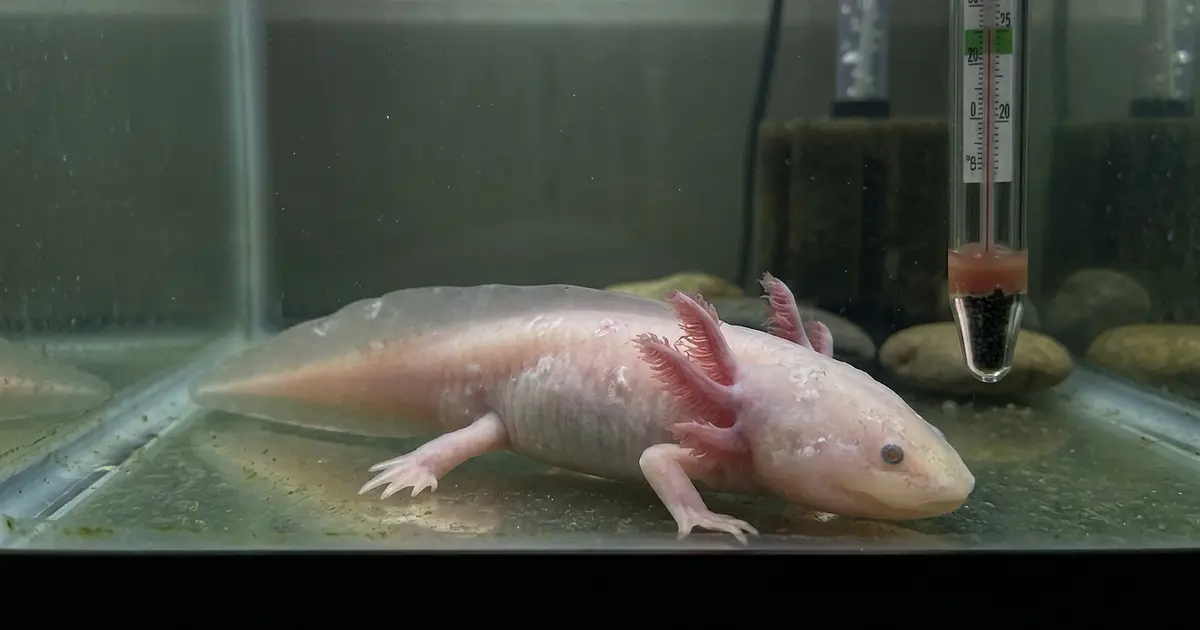
Something seems off with your axolotl and you are not sure if it is serious. Use this quick reference to compare what is normal versus what needs attention.
Healthy vs Sick: Quick Comparison
| Feature | Healthy | Concerning |
|---|---|---|
| Gills | Full, fluffy, pink/red | Shrunken, curled forward, pale, white patches |
| Skin | Smooth, consistent color | White fuzzy patches (fungus), red spots, lesions |
| Appetite | Eats readily at feeding time | Refuses food for 5+ days |
| Movement | Calm walking, occasional swimming | Frantic swimming, spinning, constant floating |
| Body shape | Body width = head width | Much thinner or bloated |
| Poop | Regular, dark, solid | None for days, stringy, white |
| Eyes | Clear, responsive | Cloudy, swollen, sunken |
| Behavior | Active at dusk, rests during day | Completely inactive, unresponsive to food |
Emergency Signs (Act Immediately)
- Floating and cannot sink for more than 24 hours
- Severe bloating (body dramatically distended)
- Open wound with visible tissue
- White cotton covering large areas of the body
- Red/bleeding patches on skin
- Gasping at the surface repeatedly
- Complete stillness with no response to touch
For emergencies: move the axolotl to a clean container with fresh, cool (16-18°C), dechlorinated water. Then diagnose using the guides below.
Diagnostic Flowchart
My axolotl is floating → Why Is My Axolotl Floating?
My axolotl has white fuzzy patches → Axolotl Fungus Treatment
My axolotl’s gills are curled or shrinking → Axolotl Stress Signs
My axolotl won’t eat → My Axolotl Won’t Eat
My axolotl has red skin patches → Check water parameters for ammonia burn
First Response Protocol
No matter what the symptom, the first three steps are always the same:
- Test water parameters (ammonia, nitrite, nitrate, pH, temperature)
- Do a water change (30-50% if parameters are off, 20% if normal)
- Move to a hospital tub if the axolotl is severely affected (clean container, cool dechlorinated water, daily 100% changes)
Poor water quality causes 80% of axolotl health issues. Fixing the water often fixes the problem.
Start Health Checker
Answer 3 questions, get a diagnosis with treatment steps
Frequently Asked Questions
Frequently Asked Questions
When should I take my axolotl to the vet?
What kind of vet treats axolotls?
Related Articles
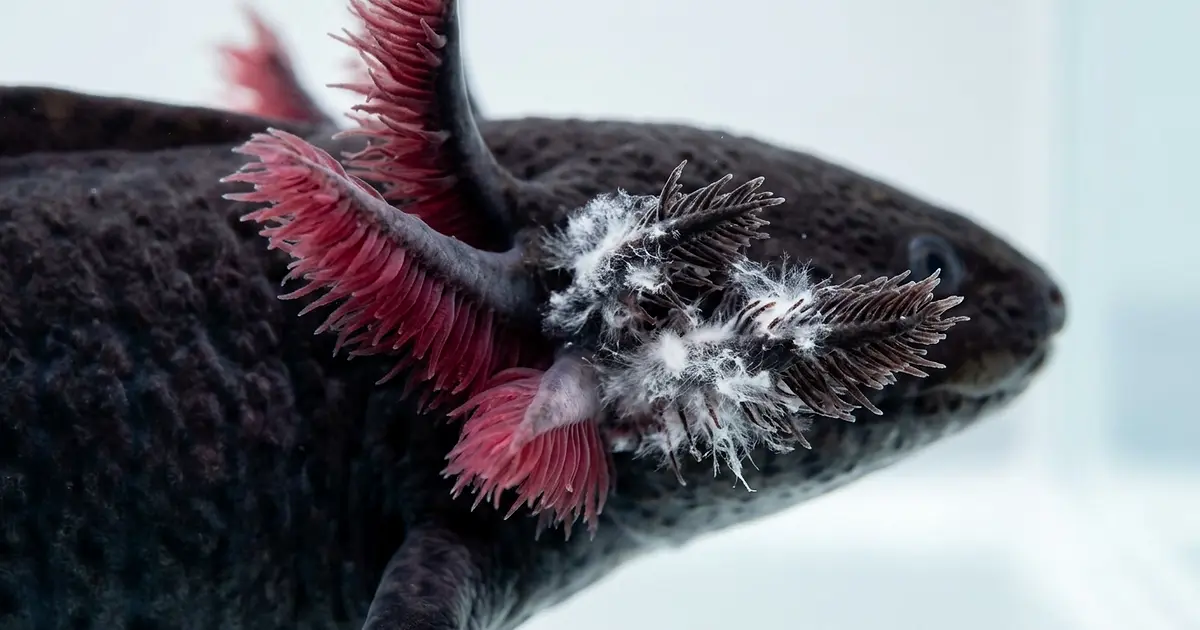
Axolotl Fungus: How to Identify & Treat It
White cotton-like growths on your axolotl? Learn to identify fungal infections, treat with salt baths and methylene blue, and prevent recurrence.
Read more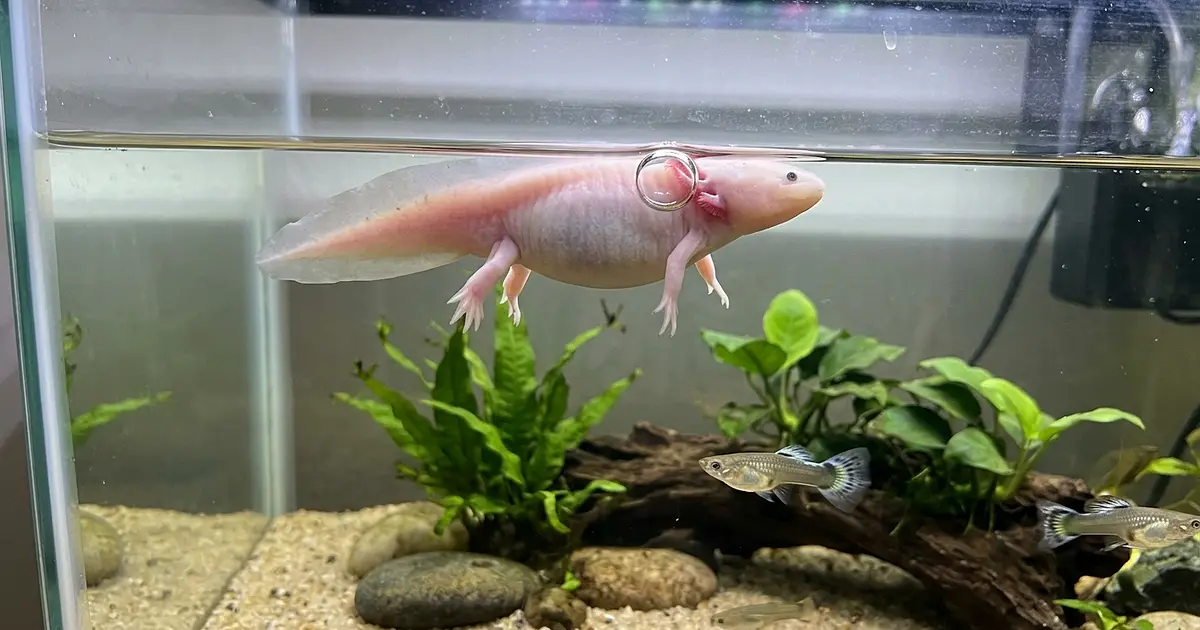
Why Is My Axolotl Floating? Causes & Solutions
Your axolotl is floating and cannot sink? Learn the common causes (air, constipation, infection) and step-by-step solutions to fix buoyancy problems.
Read more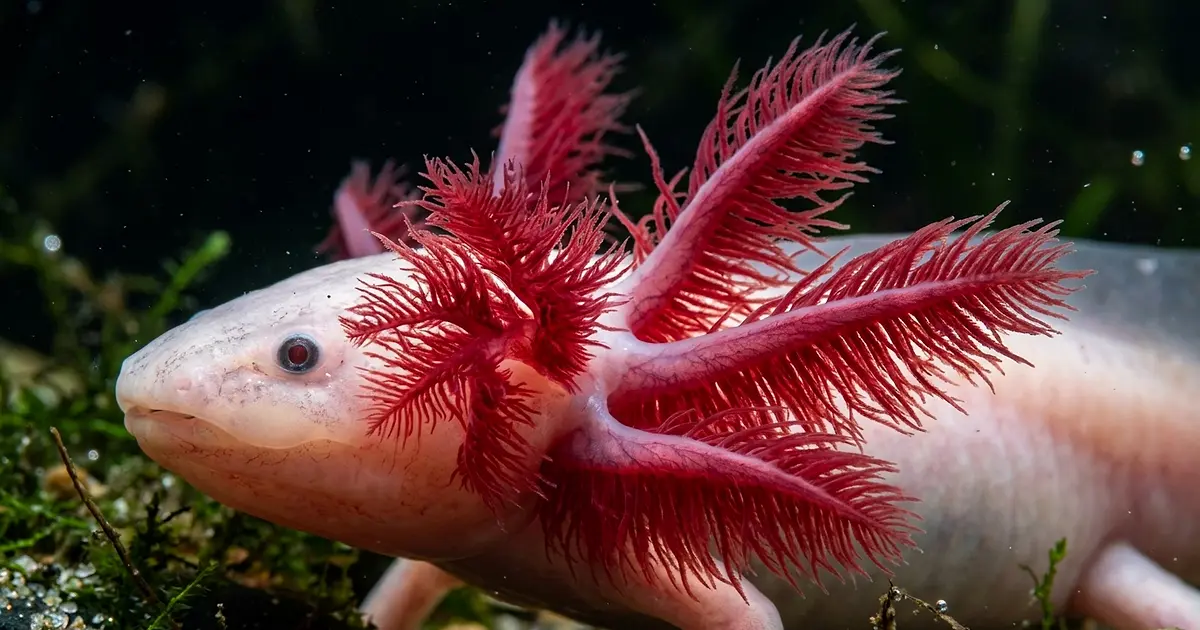
Healthy vs Unhealthy Axolotl Gills (Visual Guide)
How to read your axolotl's gills: what healthy gills look like, warning signs of disease, and how gills change with water quality and stress.
Read more