
If you are considering getting an axolotl, or your axolotl just nipped your finger during feeding, you are probably wondering: is this something to worry about?
Do Axolotls Bite?
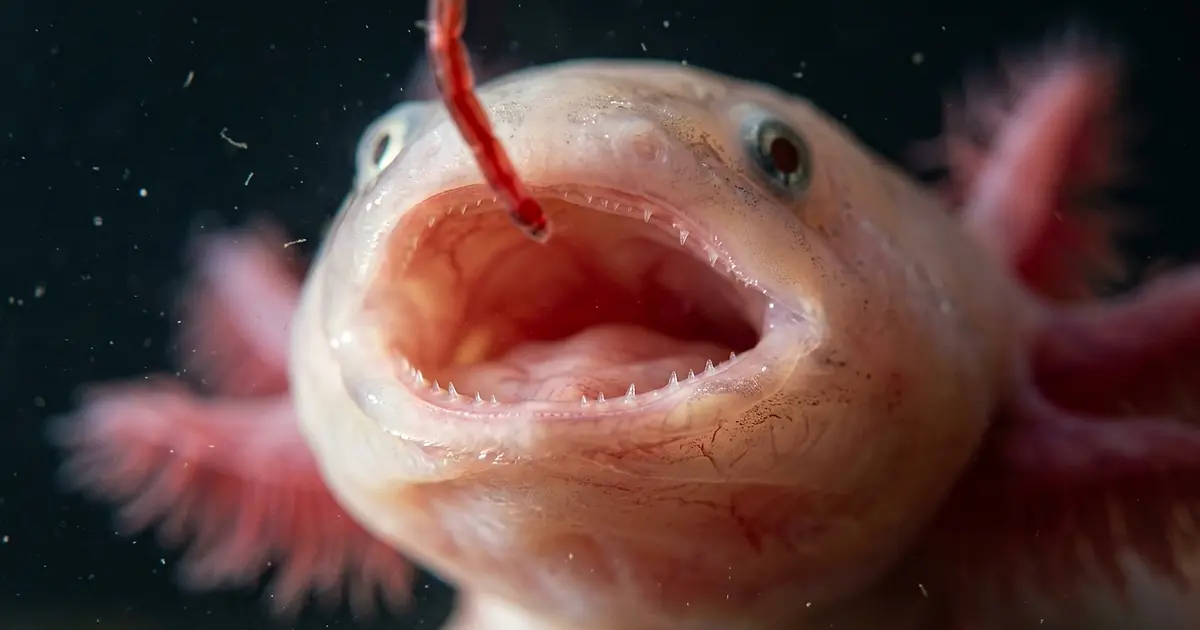
Yes, axolotls can and do bite. But it is almost always accidental during feeding. Axolotls have poor eyesight and detect food primarily through movement and smell. When you wiggle food near their face with your fingers, they may snap at your finger instead of the food.
This is not aggression. It is a feeding reflex. Axolotls do not bite defensively or out of anger.
What Does a Bite Feel Like?
Axolotl teeth are tiny, cone-shaped, and designed for gripping, not cutting. A bite from an axolotl feels like:
- A light pinch
- Sandpaper rubbing against your skin
- A slight suction (they try to swallow, realize it is not food, and let go)
It does not break skin. Even a large adult axolotl cannot bite hard enough to draw blood from a human finger.
Are Axolotls Dangerous?
No. Axolotls are completely harmless to humans:
| Concern | Risk Level |
|---|---|
| Bite injury | None (cannot break skin) |
| Venom | None (not venomous) |
| Poison | None (not poisonous to touch) |
| Disease transmission | Extremely low (different biology) |
| Allergic reaction | None known |
The biggest “danger” of an axolotl bite is getting startled and accidentally knocking something over near the tank.
Why Axolotls Bite and How to Prevent It
Common reasons for biting:
- Mistaking your finger for food during feeding
- Being startled by sudden movement near their face
- Hunger (underfed axolotls snap more aggressively)
Prevention:
- Use feeding tongs or tweezers instead of your fingers
- Move slowly near the tank
- Feed on a regular schedule so they are not overly hungry
- Do not wave your fingers in the water near their face
Do Axolotls Bite Each Other?
This is actually a bigger concern than human bites. Axolotls will bite each other, especially:
- During feeding (mistaking a sibling’s limb for food)
- When tank mates are too different in size
- In overcrowded tanks
Bites between axolotls can remove toes, gill filaments, and even entire limbs. The good news: axolotls regenerate lost body parts completely. The bad news: repeated biting is stressful and should be prevented by providing adequate space and feeding individually.
Frequently Asked Questions
Frequently Asked Questions
Does an axolotl bite hurt?
Are axolotls venomous or poisonous?
Related Articles
What Is an Axolotl? Facts, Origin & Why They're Special
The axolotl (Ambystoma mexicanum) is a fully aquatic neotenic salamander from Mexico. Species classification, anatomy, cultural significance, and basic facts.
Read more
Axolotl Facts: Biology, Habitat & Abilities
Key axolotl facts covering biology, regeneration, Aztec origins, diet, conservation status, and what makes these aquatic salamanders unique among amphibians.
Read more
How Long Do Axolotls Live? Lifespan Guide
Axolotl lifespan in captivity averages 10-15 years. Learn what affects their longevity and how to maximize your axolotl's life expectancy.
Read more