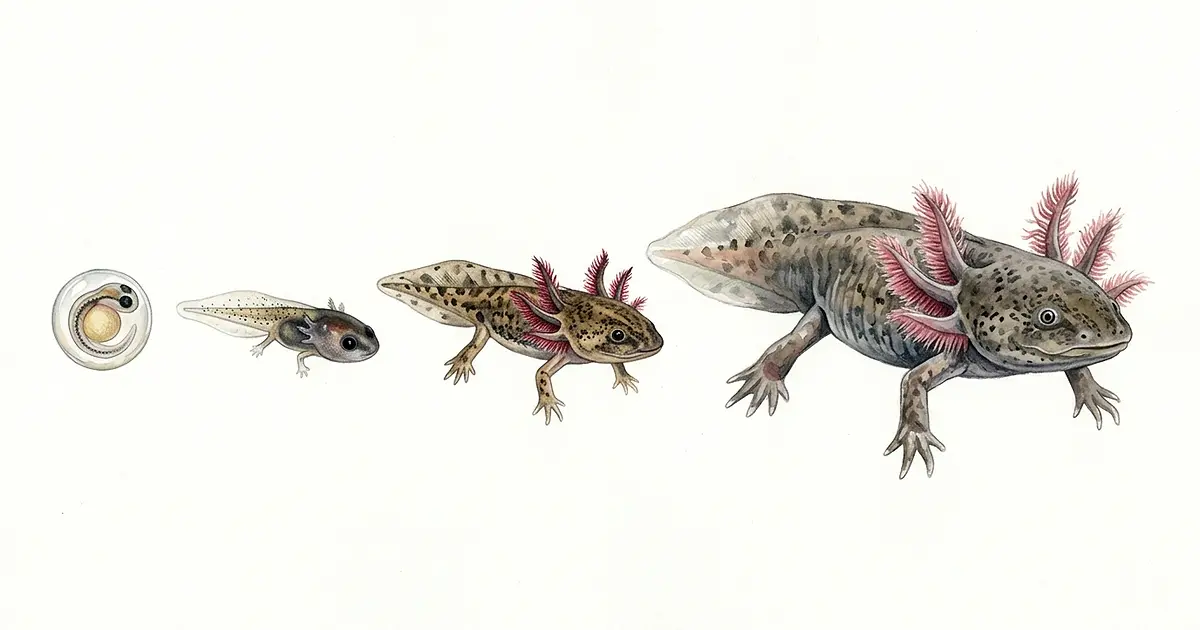
The axolotl life cycle is unique among amphibians because it skips the metamorphosis stage that defines most salamanders. Here is what happens at each stage.
Stage 1: Egg (Day 0-21)
A female lays 100-1,000 eggs attached to plants and surfaces. Each egg is 1-2mm surrounded by a clear jelly coat.
Key milestones:
- Day 1-2: cell division visible (2, 4, 8, 16 cells)
- Day 3-7: embryo takes shape, neural tube forms
- Day 8-14: limb buds appear, tail develops, heart begins beating
- Day 14-21: embryo fully formed, hatching begins
Temperature determines speed: 16°C = ~21 days, 20°C = ~14 days.
Stage 2: Larva (Day 21 - Month 2)
Newly hatched axolotls are ~1cm long with a yolk sac attached. For the first 48 hours, they absorb nutrients from the yolk and do not need food.
Key milestones:
- Day 1-2 post-hatch: yolk absorption, no feeding needed
- Week 1: first feeding (baby brine shrimp)
- Week 2: front legs begin developing
- Week 3-4: all four legs visible, active hunting behavior
- Month 2: 4-6cm, can eat bloodworms and mini pellets
Care needs: individual containers, twice-daily feeding, daily water changes. Cannibalism risk is highest at this stage.
Stage 3: Juvenile (Month 2-12)
Rapid growth phase. The axolotl develops adult proportions and transitions to an adult diet.
Key milestones:
- Month 3-4: 8-12cm, can eat small earthworm pieces
- Month 6: 12-17cm, approaching half adult size
- Month 9-12: 18-23cm, can eat whole earthworms
Care needs: regular tank (minimum 75L), daily to every-other-day feeding, weekly water changes.
Stage 4: Sub-Adult (Month 12-18)
Sexual maturity develops. Males develop a swollen cloaca, females fill out with a rounder body.
Key milestones:
- Month 12-15: sex becomes identifiable
- Month 15-18: capable of breeding (though best to wait until 18+ months)
- Reaches 20-25cm
Stage 5: Adult (Month 18+)
Full adult size reached (20-30cm). Growth slows dramatically. With proper care, this stage lasts 10-15 years.
Care needs: feeding 2-3 times per week, weekly water changes, stable water parameters.
The Missing Stage: No Metamorphosis
In a typical salamander life cycle, there would be a metamorphosis stage between juvenile and adult where the animal transforms from aquatic to terrestrial. Axolotls skip this entirely due to neoteny.
| Feature | Other Salamanders | Axolotl |
|---|---|---|
| Gills | Lost at metamorphosis | Kept for life |
| Lungs | Fully developed | Underdeveloped |
| Habitat | Aquatic → terrestrial | Aquatic forever |
| Skin | Moist → dry | Remains aquatic |
| Tail fin | Absorbed | Kept for life |
This is why axolotls are scientifically fascinating: they are essentially permanent larvae that can reproduce, something extremely rare in the animal kingdom.
Frequently Asked Questions
Frequently Asked Questions
How long does each axolotl life stage last?
Do axolotls go through metamorphosis?
Related Articles
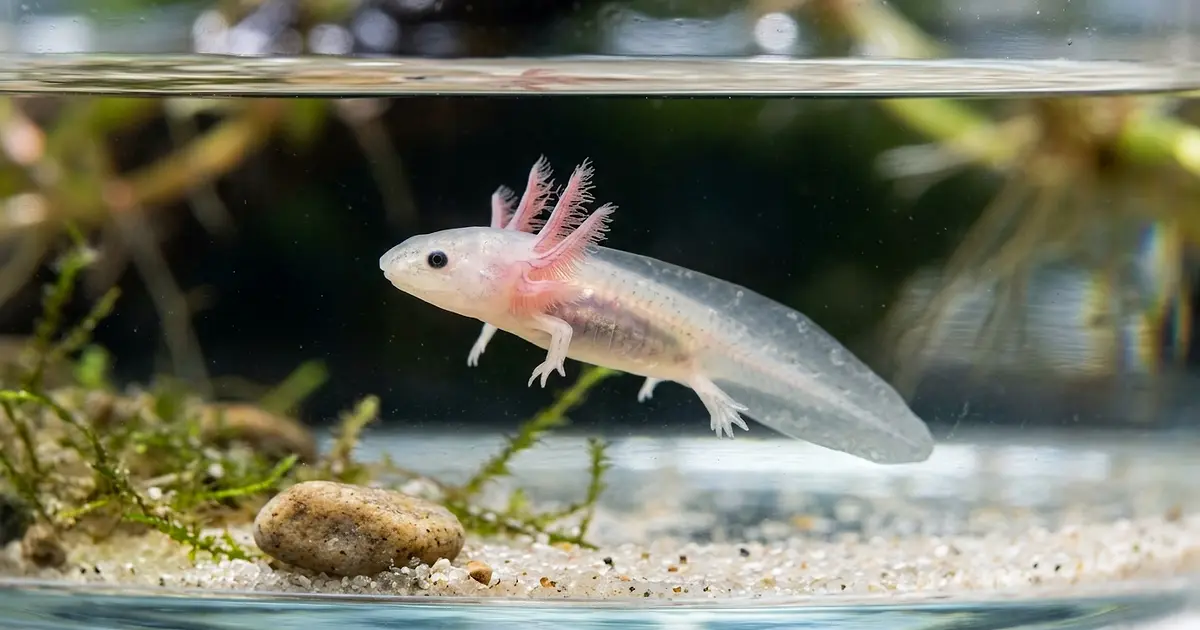
Baby Axolotl Care: From Eggs to Juvenile
Raising baby axolotls from hatching to juvenile: first foods (brine shrimp), water requirements, growth milestones, cannibalism prevention, and size separation.
Read more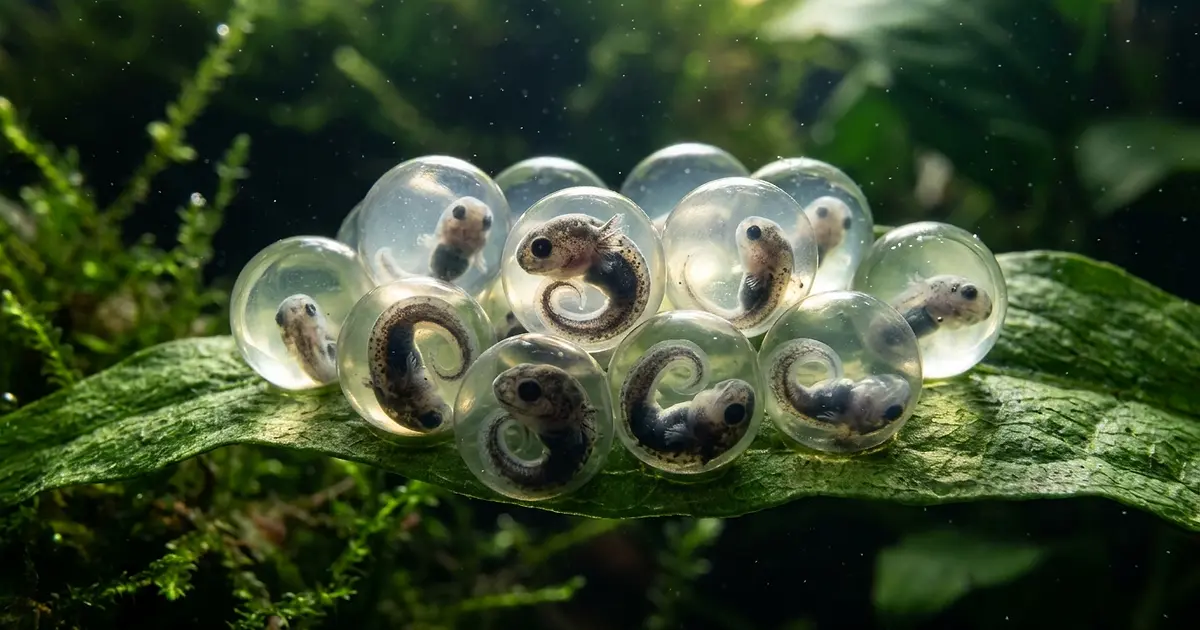
Axolotl Eggs: What to Expect & How to Care for Them
Your axolotl laid eggs? Step-by-step guide to egg care: identifying fertile vs infertile, water conditions, timeline to hatching, and what to do next.
Read more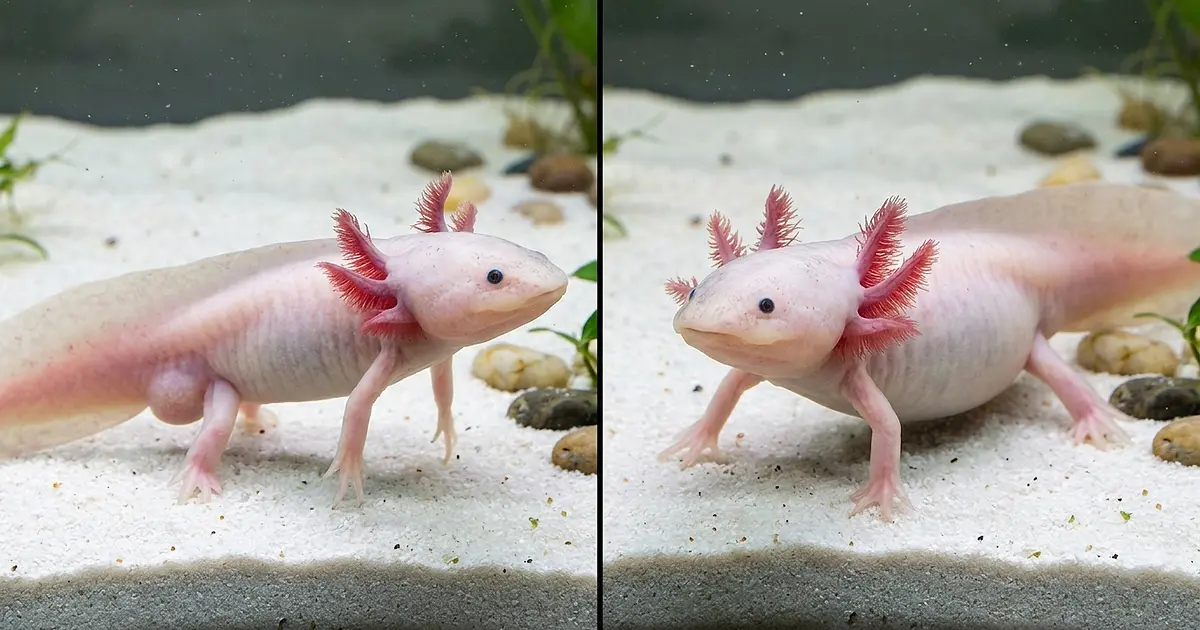
Male vs Female Axolotl: How to Tell the Difference
How to sex your axolotl: cloaca shape, body differences, and the minimum age for reliable identification. Visual comparison guide.
Read more