
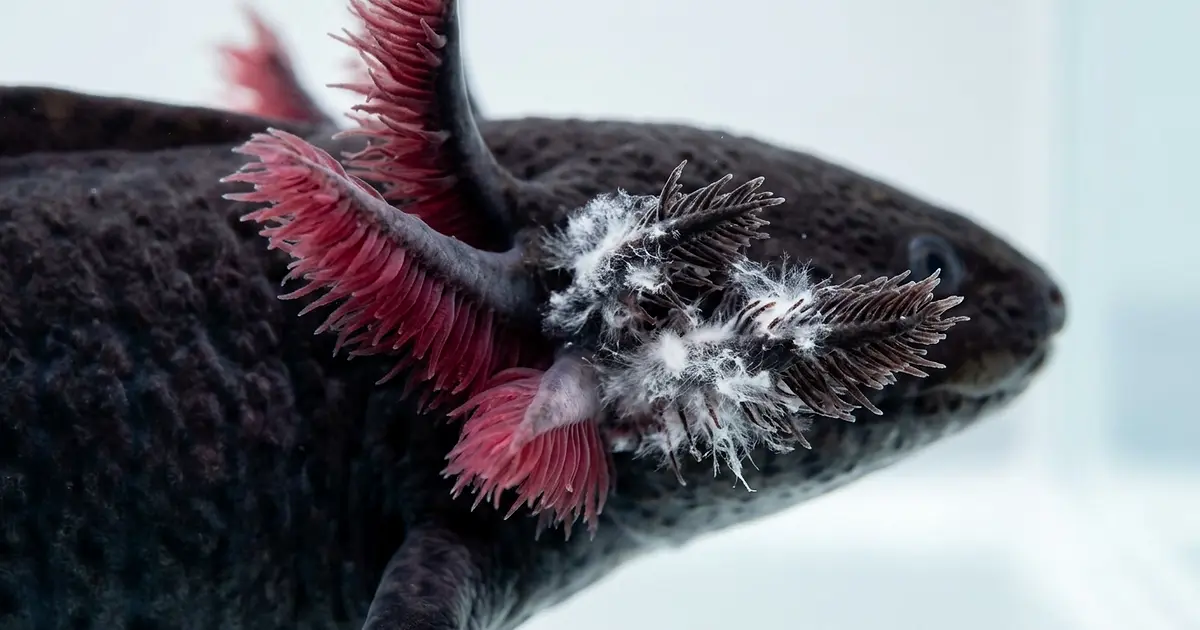
Fungal infections are one of the most common health issues in axolotls. The good news: caught early, they are very treatable.
Identifying Fungus
Fungus on axolotls appears as white, fluffy, cotton-like growths. Common locations:
- Gills: most common site, appears on gill filaments
- Limbs: especially on toes or areas with recent injuries
- Tail tip: particularly after nipping from tank mates
- Body: less common, usually indicates advanced infection
Do not confuse with:
- Normal slime coat (smooth, not fuzzy)
- Shed skin (thin, transparent sheets)
- Bacterial infection (smooth white patches, not fluffy)
Causes
- Poor water quality: the #1 cause. High ammonia or nitrite damages the slime coat, allowing fungal spores to take hold
- Injury: any wound is vulnerable to fungal colonization
- Stress: chronic stress weakens the immune system
- Cold temperatures: while axolotls need cool water, very cold temps (below 10°C) can reduce immune function
Treatment
Step 1: Improve Water Quality (Always)
Test water immediately. If ammonia or nitrite is above 0 ppm, do a 50-80% water change. This alone may resolve mild cases.
Step 2: Salt Baths
For active fungal growths:
- Prepare a container with 1 liter of dechlorinated tank water
- Add 2-3 teaspoons of non-iodized salt (aquarium salt or pure sea salt)
- Dissolve completely
- Place the axolotl in the salt bath for 10-15 minutes
- Return to the main tank
- Repeat daily for 5-7 days
Never add salt directly to the main tank. Axolotls are freshwater animals and prolonged salt exposure is harmful.
Step 3: Methylene Blue (Severe Cases)
If salt baths do not resolve the infection after 5-7 days:
- Prepare a separate container with dechlorinated water
- Add methylene blue according to product instructions (usually 1-2 drops per liter)
- Soak the axolotl for 30 minutes
- Repeat daily for 3-5 days
Step 4: Fridging (Last Resort)
For severe, unresponsive infections, fridging at 4-8°C slows fungal growth while boosting the axolotl’s immune response.
Prevention
- Maintain optimal water parameters at all times
- Perform weekly 20-30% water changes
- Remove uneaten food promptly
- Avoid injuring axolotls during handling or tank maintenance
- Quarantine new axolotls for 2-4 weeks before adding to an existing tank
Use the Health Checker
Not sure if it's fungus? Run a quick diagnosis
Frequently Asked Questions
Frequently Asked Questions
What does axolotl fungus look like?
How long does it take to treat axolotl fungus?
Related Articles
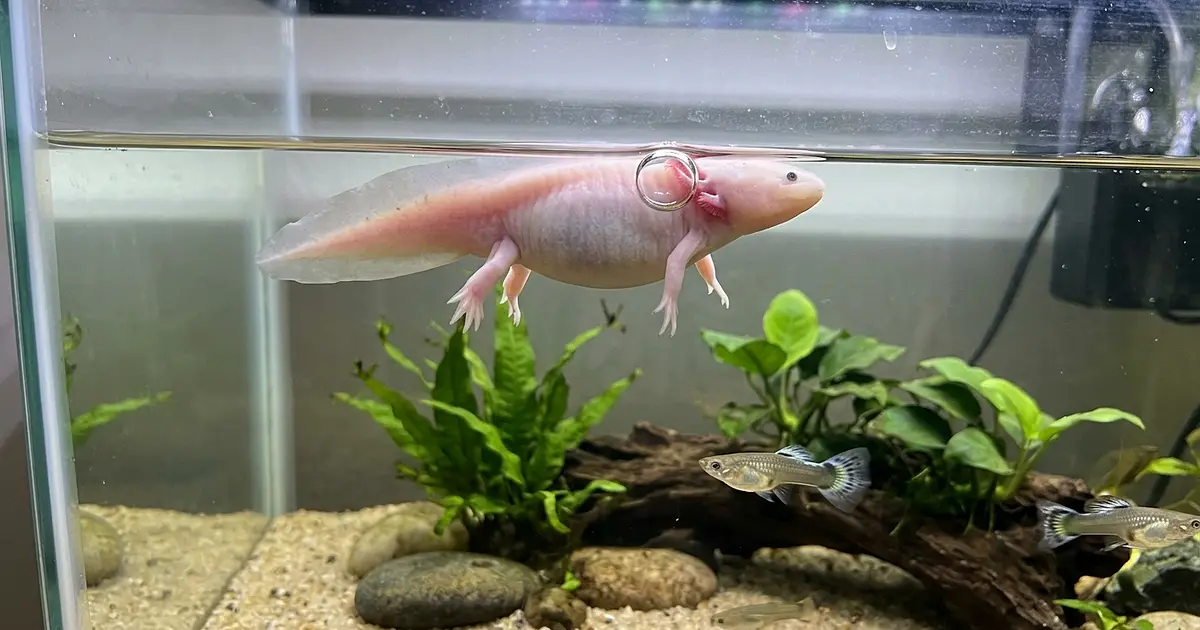
Why Is My Axolotl Floating? Causes & Solutions
Your axolotl is floating and cannot sink? Learn the common causes (air, constipation, infection) and step-by-step solutions to fix buoyancy problems.
Read more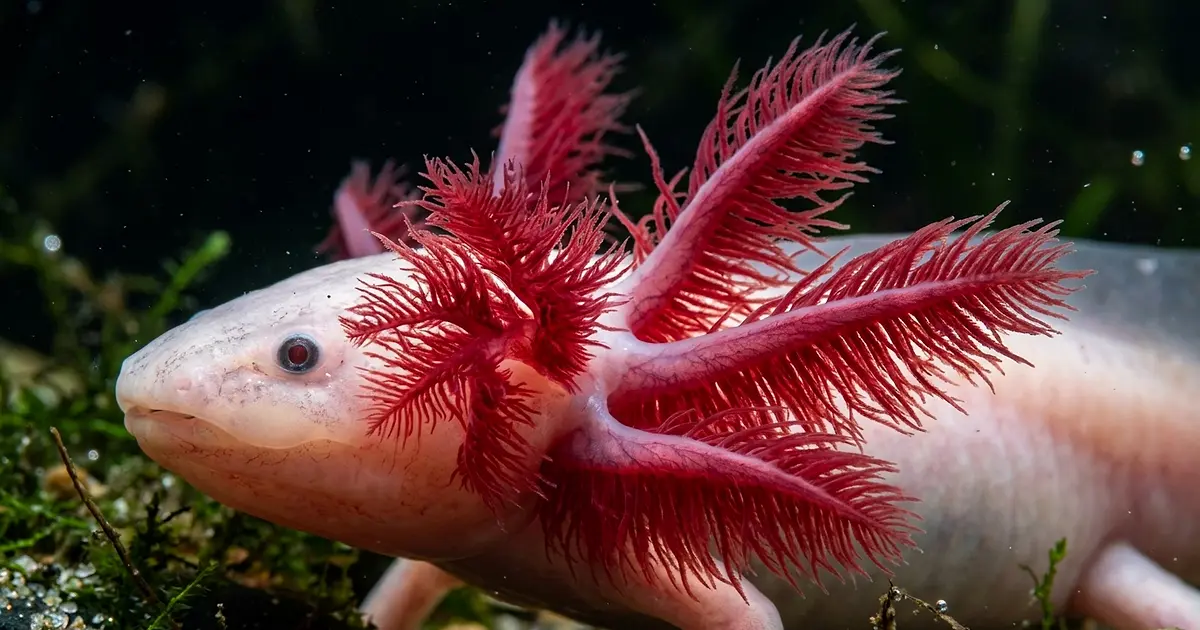
Healthy vs Unhealthy Axolotl Gills (Visual Guide)
How to read your axolotl's gills: what healthy gills look like, warning signs of disease, and how gills change with water quality and stress.
Read more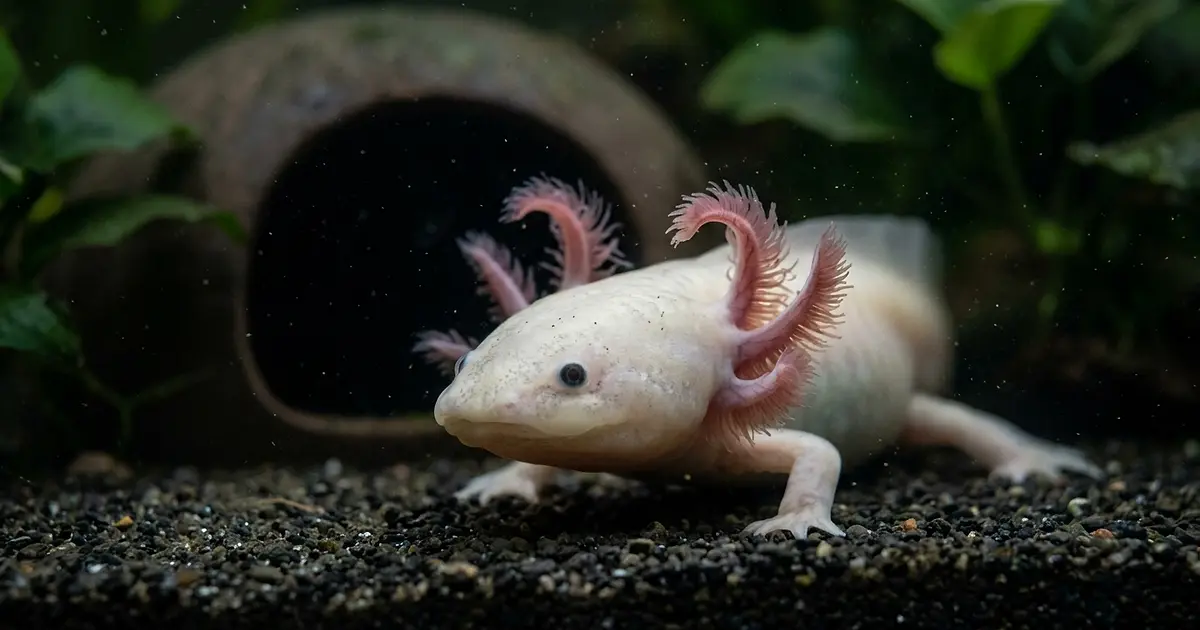
Axolotl Stress Signs: Curled Gills, Floating & More
How to recognize stress in your axolotl: curled gills, loss of appetite, frantic swimming, and pale color. Causes, prevention, and solutions.
Read more