
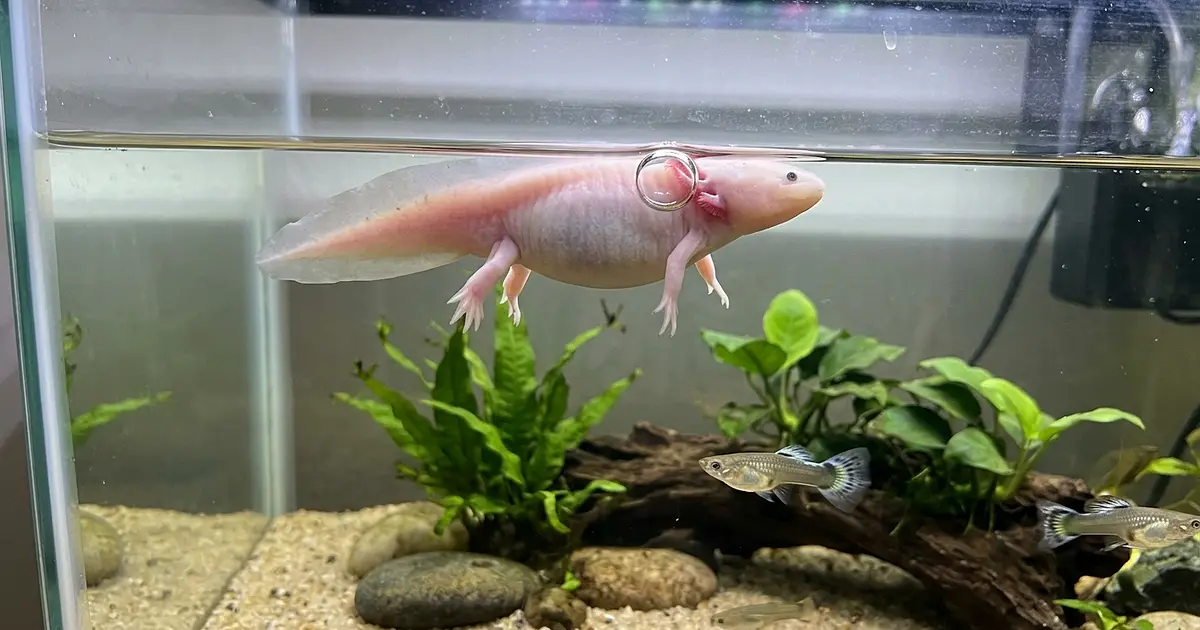
Floating is one of the most alarming things an axolotl owner can witness. Understanding the cause helps you respond appropriately.
Normal vs Abnormal Floating
Normal: axolotl swims to the surface, gulps air, and returns to the bottom within seconds. This is how they supplement their oxygen intake and is completely normal behavior.
Abnormal: axolotl floats at the surface and cannot return to the bottom, or keeps floating back up after trying to swim down. This indicates a buoyancy problem.
Common Causes
1. Swallowed Air
The most common cause, especially after eating at the surface or during feeding.
Signs: floating immediately after eating, no bloating, otherwise behaving normally Solution: wait 24-48 hours. Most air passes on its own. Avoid feeding at the surface.
2. Constipation / Gas
Food fermenting in the gut produces gas that causes buoyancy issues.
Signs: bloated belly, no poop for several days, may have been recently overfed Solution: fast for 3-5 days. Move to a shallow container with clean, cool water. Gentle belly massage can help.
3. Impaction
If the axolotl swallowed gravel or an oversized food item, a physical blockage causes gas buildup.
Signs: severe bloating, complete food refusal, lethargy, floating for days Solution: fridging at 4-8°C to slow metabolism and encourage the obstruction to pass. If no improvement in 5-7 days, consult an exotic vet.
4. Infection
Bacterial or parasitic infections can cause fluid buildup (ascites) or gas production in the body cavity.
Signs: floating combined with other illness signs (lethargy, gill problems, appetite loss, skin discoloration) Solution: address the infection. Salt baths, improved water quality, and possibly antibiotics from a vet.
5. Ammonia/Nitrite Poisoning
Poor water quality can cause tissue damage that leads to buoyancy issues.
Signs: red patches on skin, curled gills, floating, lethargy Solution: immediate 50-80% water change. Move to clean water.
Step-by-Step Response
- Move to a shallow container (water just covering the body) with dechlorinated, cool water (16-18°C)
- Fast for 2-3 days (no food at all)
- Test the main tank water (ammonia, nitrite, nitrate)
- Observe for 48 hours: if the axolotl passes gas/poop and sinks, the issue is resolving
- If no improvement: try fridging at 4-8°C with daily 100% water changes
- If still floating after 5-7 days: consult an exotic veterinarian
Run a Health Check
Floating can have multiple causes. Narrow it down.
Frequently Asked Questions
Frequently Asked Questions
Is it normal for axolotls to float?
How do I help a floating axolotl?
Related Articles
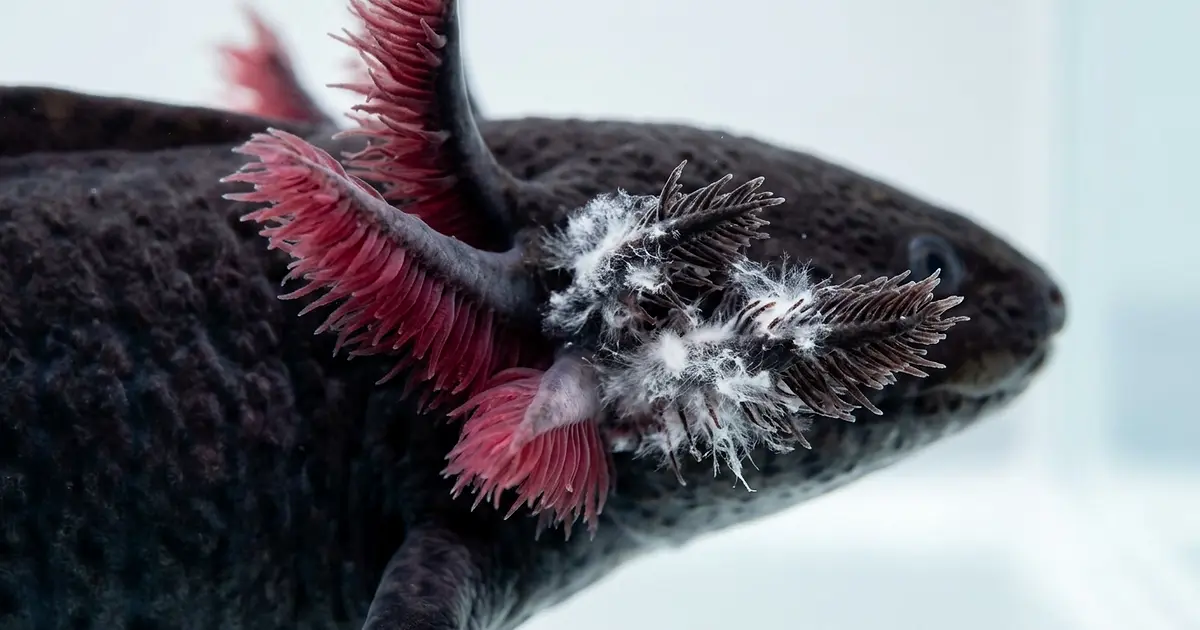
Axolotl Fungus: How to Identify & Treat It
White cotton-like growths on your axolotl? Learn to identify fungal infections, treat with salt baths and methylene blue, and prevent recurrence.
Read more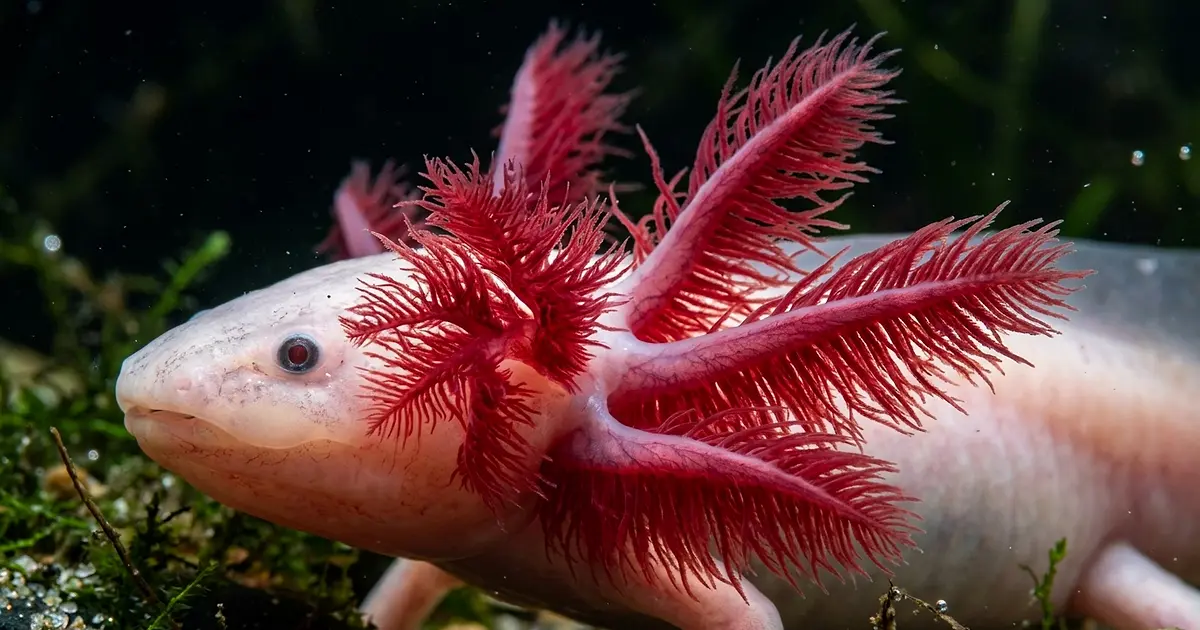
Healthy vs Unhealthy Axolotl Gills (Visual Guide)
How to read your axolotl's gills: what healthy gills look like, warning signs of disease, and how gills change with water quality and stress.
Read more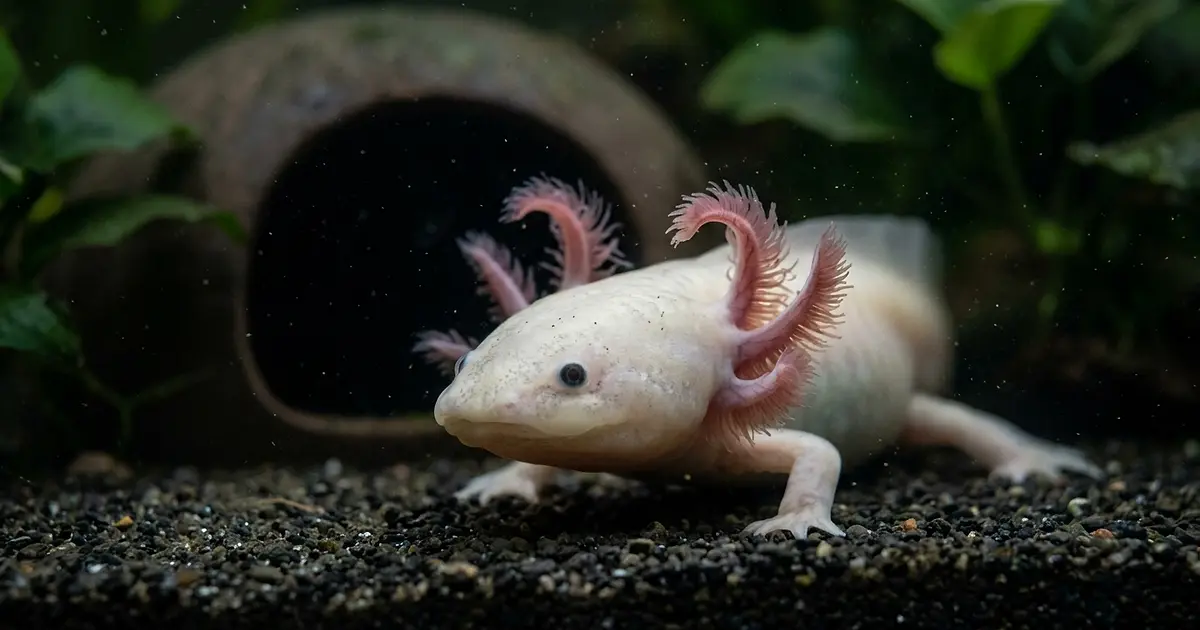
Axolotl Stress Signs: Curled Gills, Floating & More
How to recognize stress in your axolotl: curled gills, loss of appetite, frantic swimming, and pale color. Causes, prevention, and solutions.
Read more