Breeding axolotls is a rewarding experience, but it requires preparation and commitment. A single breeding event can produce hundreds of eggs, and raising the larvae demands time, space, and resources.
Sexing Axolotls: Male vs Female
Axolotls can be reliably sexed once they reach sexual maturity (12-18 months).
| Feature | Male | Female |
|---|---|---|
| Cloaca | Noticeably swollen | Flat, barely visible |
| Body shape | Longer, slimmer | Rounder, wider body |
| Tail | Longer relative to body | Shorter relative to body |
| Size | Slightly smaller on average | Slightly larger on average |
The cloaca (the bump behind the rear legs) is the most reliable indicator. Males have a prominent, swollen cloaca that is visible from the side.
Triggering Breeding
Axolotls naturally breed when they experience a temperature change that mimics seasonal shifts:
- Cooling period: reduce temperature to 12-14°C for 2-4 weeks
- Gradual warming: slowly raise temperature back to 16-18°C
- Conditioning: feed high-quality food (earthworms) during this period
This temperature cycling signals to the axolotls that spring has arrived and triggers breeding behavior.
The Breeding Process
- The male deposits spermatophores (small, white, cone-shaped packets) on the tank floor
- He performs a courtship dance, nudging the female and leading her over the spermatophores
- The female picks up the spermatophore with her cloaca
- Within 24-72 hours, she begins laying eggs on plants, decorations, and tank walls
- Egg laying can take 12-48 hours and result in 100-1,000 eggs
Egg Care
- Remove eggs from the parent tank to prevent the adults from eating them
- Place in a separate container with clean, cool water (16-18°C)
- Remove any white, opaque eggs (unfertilized) to prevent fungus spreading to healthy eggs
- Perform daily water changes on the egg container
- Fertile eggs are transparent with a visible dark embryo that grows larger each day
- Hatching occurs in 14-21 days
Raising Baby Axolotls (Larvae)
Newly hatched axolotls are tiny (about 1 cm) and require special care:
- First 24-48 hours: they live off their yolk sac and do not need feeding
- First food: live baby brine shrimp (newly hatched artemia) or microworms
- Separate by size: larger larvae will cannibalize smaller ones
- Daily water changes: essential for survival
- Individual containers: ideal for the first few weeks, especially if sizes vary
At about 2 months, you can switch to bloodworms and small earthworm pieces. By 4-6 months, they can eat the same food as adults.
Important Considerations Before Breeding
- Space: you may need to house 100+ babies temporarily
- Time: raising larvae requires daily feeding and water changes for months
- Rehoming: have a plan for finding homes for the juveniles
- Genetics: avoid breeding related axolotls to prevent genetic issues
Articles in This Section
Baby Axolotl Care: From Eggs to Juvenile
Complete guide to raising baby axolotls. Feeding, water requirements, growth stages, and common problems from hatching to 6 months old.
Read moreAxolotl Eggs: What to Expect & How to Care for Them
Your axolotl laid eggs? Step-by-step guide to egg care: identifying fertile vs infertile, water conditions, timeline to hatching, and what to do next.
Read moreMale vs Female Axolotl: How to Tell the Difference
How to sex your axolotl: cloaca shape, body differences, and the minimum age for reliable identification. Visual comparison guide.
Read more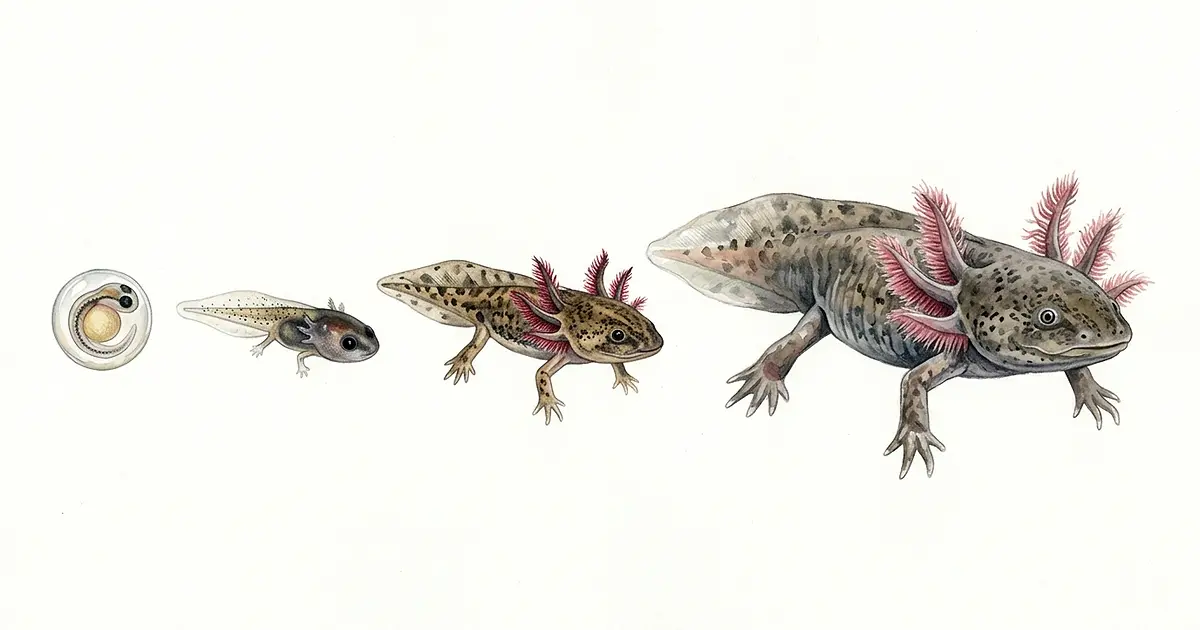
Axolotl Life Cycle: From Egg to Adult
Follow the axolotl life cycle stage by stage: egg, larva, juvenile, sub-adult, and adult. Growth timeline, milestones, and what to expect at each phase.
Read more