
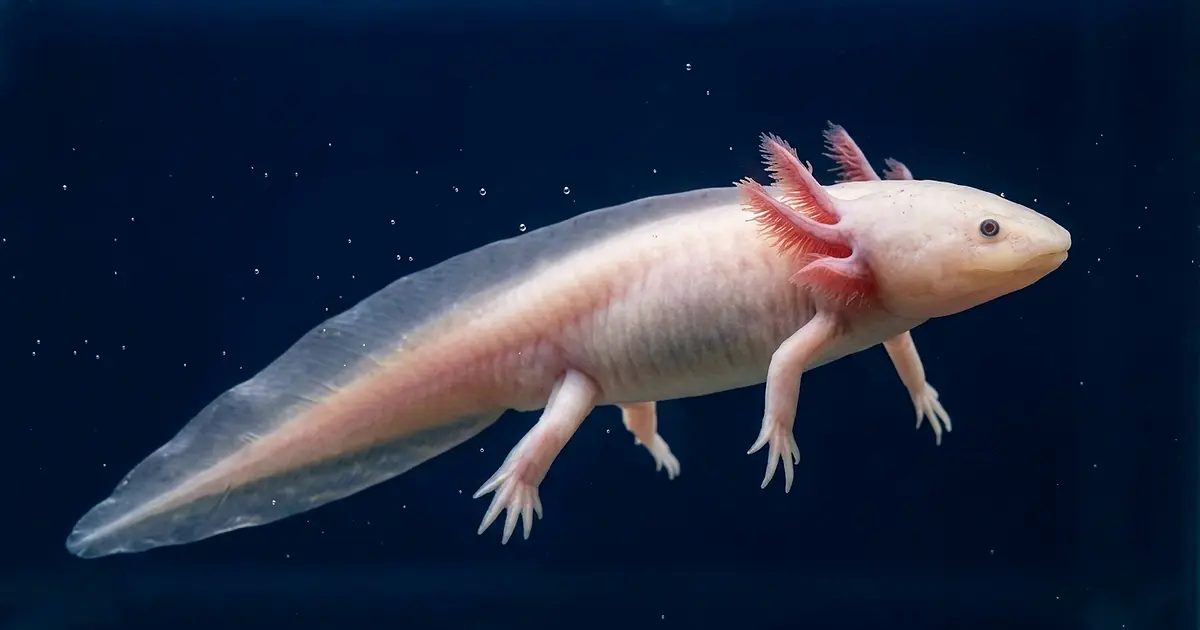
Understanding axolotl anatomy helps you provide better care, spot health issues early, and appreciate just how unique these animals are.
External Anatomy
Gills
The most distinctive feature. Axolotls have three pairs of external gills (6 total) that branch out from either side of the head behind the jaw.
- Function: gas exchange (breathing). Blood flows through the gill filaments and absorbs oxygen from the water.
- Color: healthy gills are pink to deep red (the color comes from blood vessels)
- Movement: axolotls can flick their gills to increase water flow over the filaments
- Health indicator: gill condition is the best visible measure of overall health. Fluffy, full gills = healthy. Shrunken, curled gills = stressed or sick.
Eyes
- No eyelids (cannot blink or close eyes)
- Poor visual acuity (rely on other senses)
- Sensitive to bright light (keep tank lighting dim)
- Can detect movement and light/dark changes
- Albino morphs have red/pink eyes due to lack of melanin
Teeth
- Tiny, cone-shaped pediceillate teeth
- Designed for gripping, not cutting or chewing
- Located on both jaws and the roof of the mouth
- Axolotls swallow prey whole, teeth just hold it in place
- Cannot harm humans
Limbs
- Four legs: front legs have 4 fingers, back legs have 5 toes
- Used for walking along the bottom (not swimming)
- Fully regeneratable if lost
- Webbed slightly for some water displacement
Tail
- Long, laterally compressed tail with a dorsal fin running along the top
- Primary swimming propulsion
- The fin extends along the back and tail (larval feature retained through neoteny)
- Also fully regeneratable
Skin
- Smooth, slimy, covered in a protective mucus layer (slime coat)
- Permeable: absorbs substances from the water (why water quality is critical)
- Contains chromatophores (pigment cells) that determine color morph
- No scales, no armor, very delicate
Internal Anatomy
Respiratory System
Axolotls breathe through three systems:
- External gills (primary): most oxygen exchange
- Skin (secondary): permeable skin absorbs oxygen
- Lungs (supplementary): underdeveloped, used for occasional air gulps
Digestive System
- Simple tube from mouth to cloaca
- Food is swallowed whole and digested slowly
- Prone to impaction from swallowing hard objects (gravel)
- Waste exits through the cloaca (combined reproductive and excretory opening)
Lateral Line System
- A network of sensory cells along the body and head
- Detects vibrations and water pressure changes
- Helps locate prey and navigate in dark or murky water
- Similar to the system found in fish
Fun Anatomy Facts
- Axolotl DNA contains 32 billion base pairs (10x the human genome)
- They have the largest genome of any animal that has been fully sequenced
- Their blood carries oxygen using both hemoglobin (like humans) and skin absorption
- The brain can partially regenerate after injury, unique among vertebrates
FAQ
Frequently Asked Questions
Frequently Asked Questions
Do axolotls have teeth?
Yes. Axolotls have tiny, cone-shaped teeth called pediceillate teeth. They are designed for gripping prey, not chewing. Axolotls swallow food whole rather than biting pieces off.
Can axolotls see well?
No. Axolotls have poor eyesight. They lack eyelids and are sensitive to bright light. They rely primarily on smell, vibration detection, and lateral line sense to find food and navigate.
Keep Reading
Related Articles
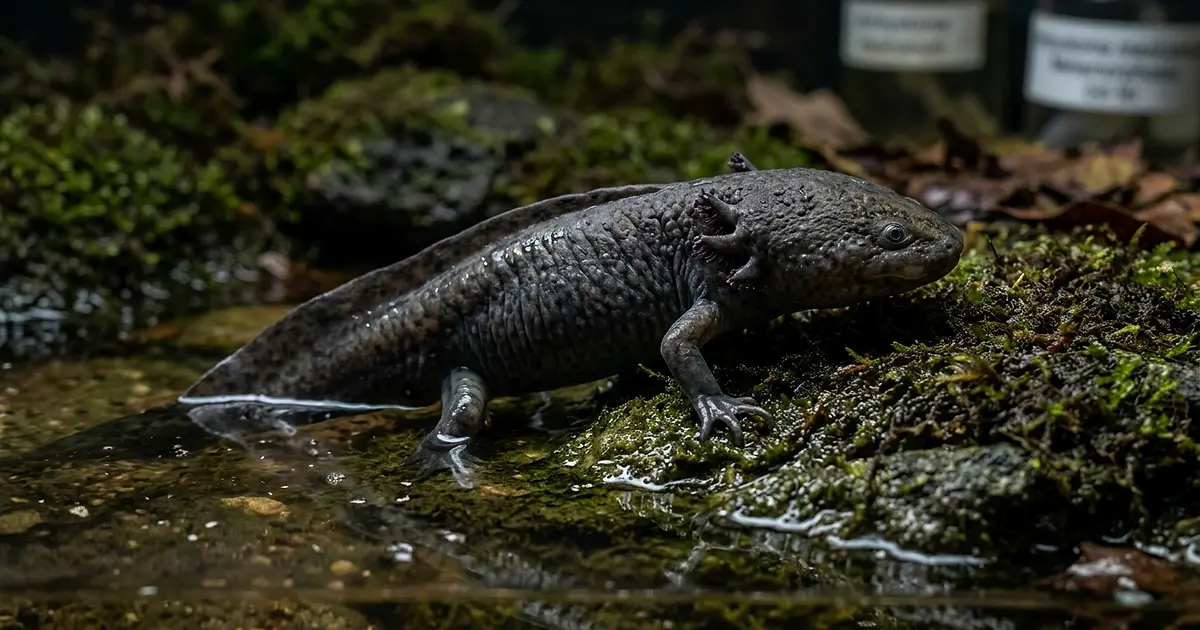
Axolotl Metamorphosis: When Axolotls Turn Into Salamanders
Can axolotls transform into land salamanders? What triggers metamorphosis, why it is dangerous, and what a morphed axolotl looks like.
Read more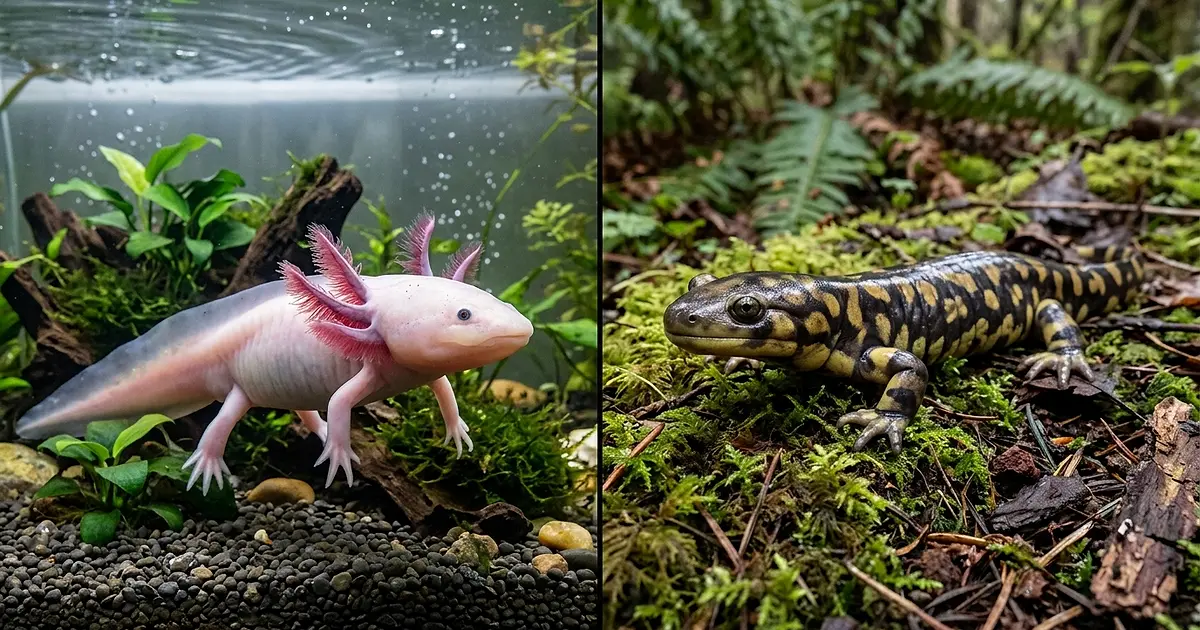
Axolotl vs Salamander: Key Differences Explained
Axolotl vs salamander vs newt: the key differences in anatomy, habitat, lifecycle, and care. Why axolotls are unique among amphibians.
Read more