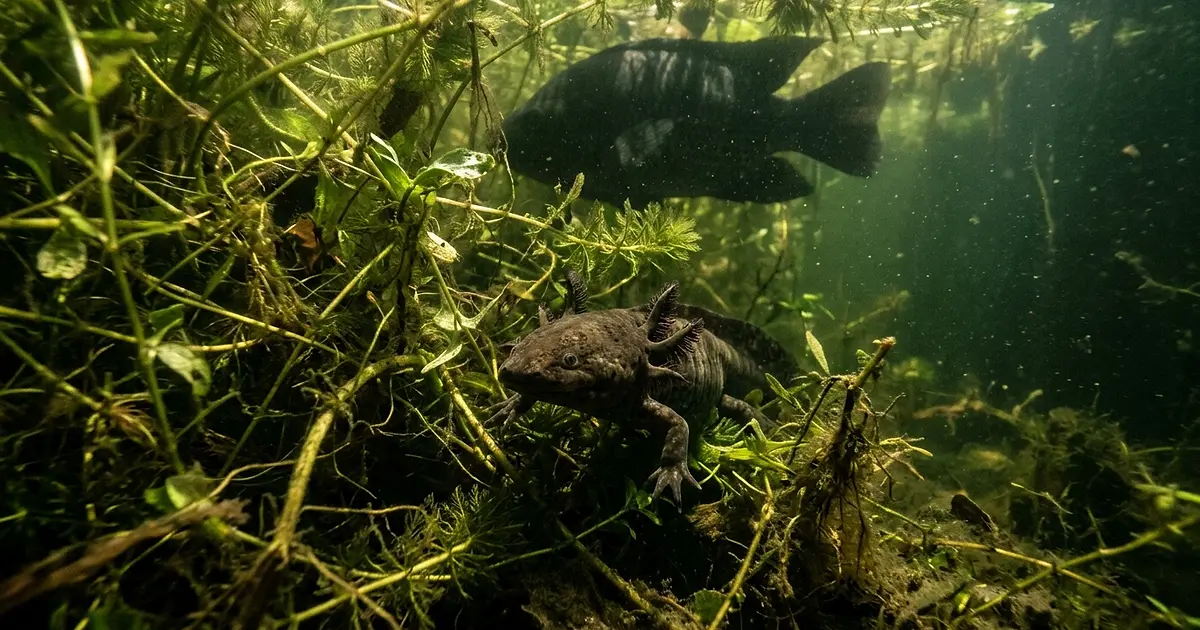
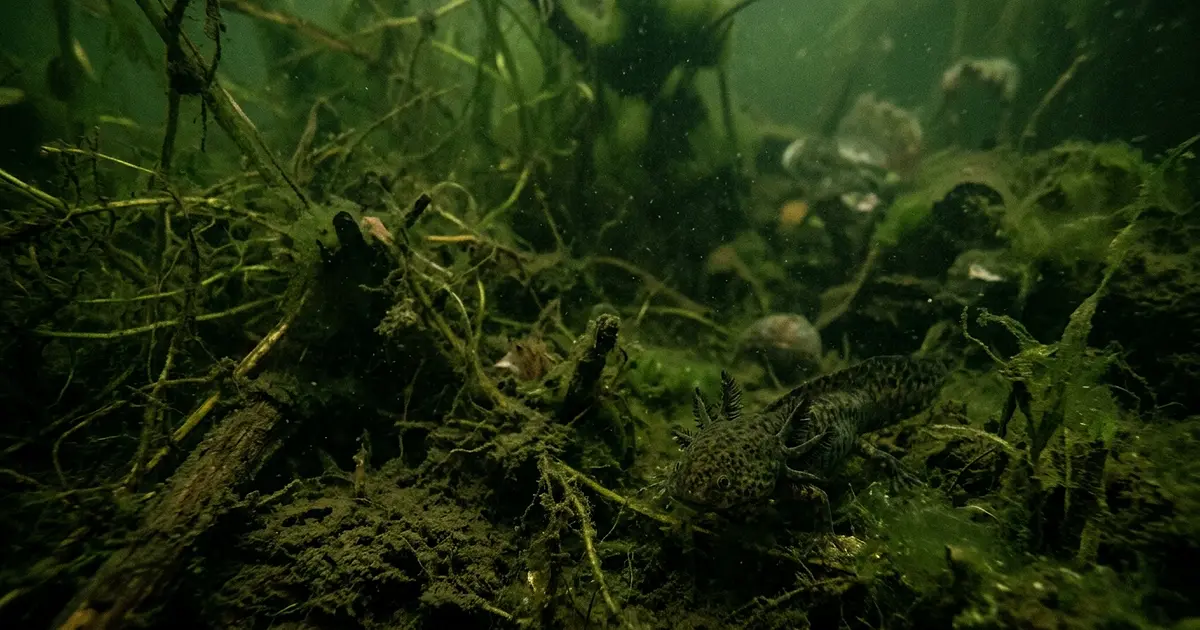
The axolotl is classified as Critically Endangered on the IUCN Red List, one step from extinction in the wild. The contrast between their booming captive population and vanishing wild numbers makes them one of conservation’s most paradoxical species.
The Numbers
| Year | Wild Density (per km²) | Trend |
|---|---|---|
| 1998 | 6,000 | Baseline |
| 2004 | 1,000 | -83% |
| 2008 | 100 | -98% |
| 2014 | 36 | -99.4% |
| 2020s | < 36 | Still declining |
In captivity: an estimated 10+ million axolotls exist in homes, labs, and breeding facilities worldwide.
Main Threats
Urbanization
Mexico City (22+ million people) has expanded directly over Lake Xochimilco, reducing the canal system to a fraction of its original extent. What remains is fragmented and degraded.
Water Pollution
Agricultural runoff, untreated sewage, and industrial waste contaminate the remaining canals. Water quality in many sections is incompatible with axolotl survival.
Invasive Species
Tilapia and Asian carp were introduced to the canals for food production in the 1970s-80s. They eat axolotl eggs and larvae, and compete with adults for food. This is considered the single most damaging threat.
Climate Change
Changing rainfall patterns and rising temperatures affect water levels and temperatures in the shallow canal system, further stressing the remaining population.
Conservation Efforts
Despite the dire numbers, active conservation programs exist:
- Captive breeding at UNAM (National Autonomous University of Mexico): maintains genetically diverse breeding colonies
- Chinampa restoration: rebuilding the traditional floating gardens that create axolotl habitat
- Community-based conservation: local farmers paid to maintain clean chinampas and protect axolotl-friendly zones
- Invasive species removal: trapping programs targeting tilapia and carp
- Research: studying genetics, disease resistance, and habitat requirements for future reintroduction
- Ecotourism: Xochimilco boat tours raise awareness and fund conservation
How Pet Owners Can Help
- Never release captive axolotls into the wild (they carry diseases foreign to wild populations)
- Support conservation organizations working in Xochimilco
- Spread awareness about the species’ endangered status
- Buy from reputable breeders who maintain genetic diversity, not wild-caught animals